We are proud to be
Regenerative
Organic Certified

But certifications only tell part of the story…
With an unfortunate amount of greenwashing in the marketplace, the promises can start to ring hollow.
We can tell you honestly that there are easier ways to make a living than farming. But doing it right is fulfilling and meaningful to us.
We are proud of this certification, because it affirms that our farmers care about how their work impacts the planet and our health.
This has been true since the creation of our favorite seal of confidence— the Farmer Ground Flour logo. We want to add to that confidence by continuing to show you what farming with care looks like.
Photo courtesy of The Rodale Institute
There is a deep generosity in caring for the land, and a deep appreciation for what it gives back to us tenfold.
We work with a group of farmers who prioritize soil health.
In this video, Thor Oechsner explains why this is so important to them, and how they plan for moments in their rotations that allow the soil to rest and recover from the hard work of growing crops like wheat and corn.
“We have to realize that farming can be an extractive process, especially if we do it wrong.”
-Thor Oechsner
Learn more about some of our good farming practices
-
Long crop rotations are the cornerstone organic practice for soil health and weed suppression. A field that is in rye one year, will have a whole year in a cover crop, before being planted with a different cash crop like spring wheat. This field will not see rye again for six years.
The soil is allowed to recover from the nutrient demands of each crop, and weeds and pests are never given the same conditions or timing two years in a row.
-
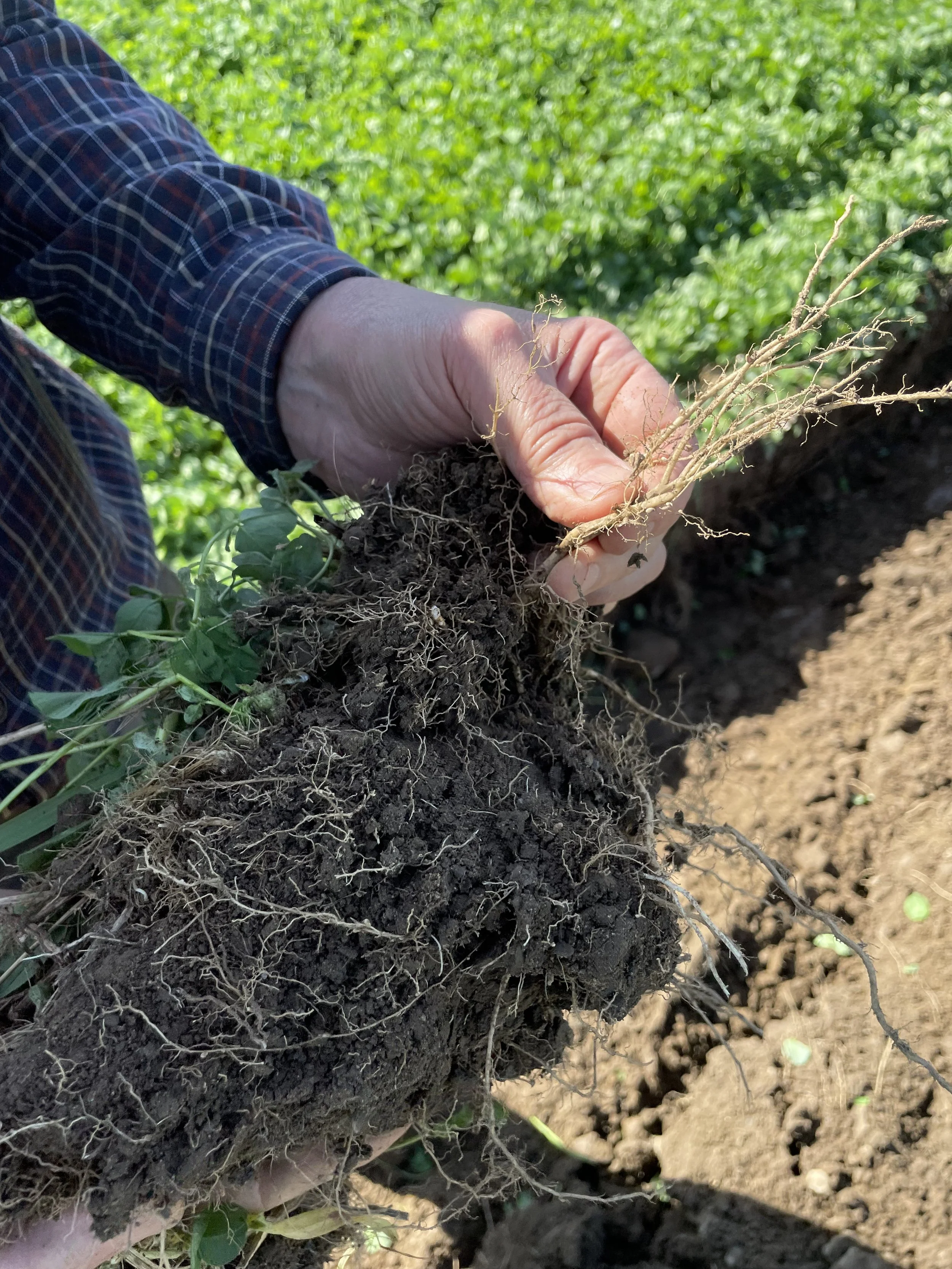
Cover crops are medicinal to the land.
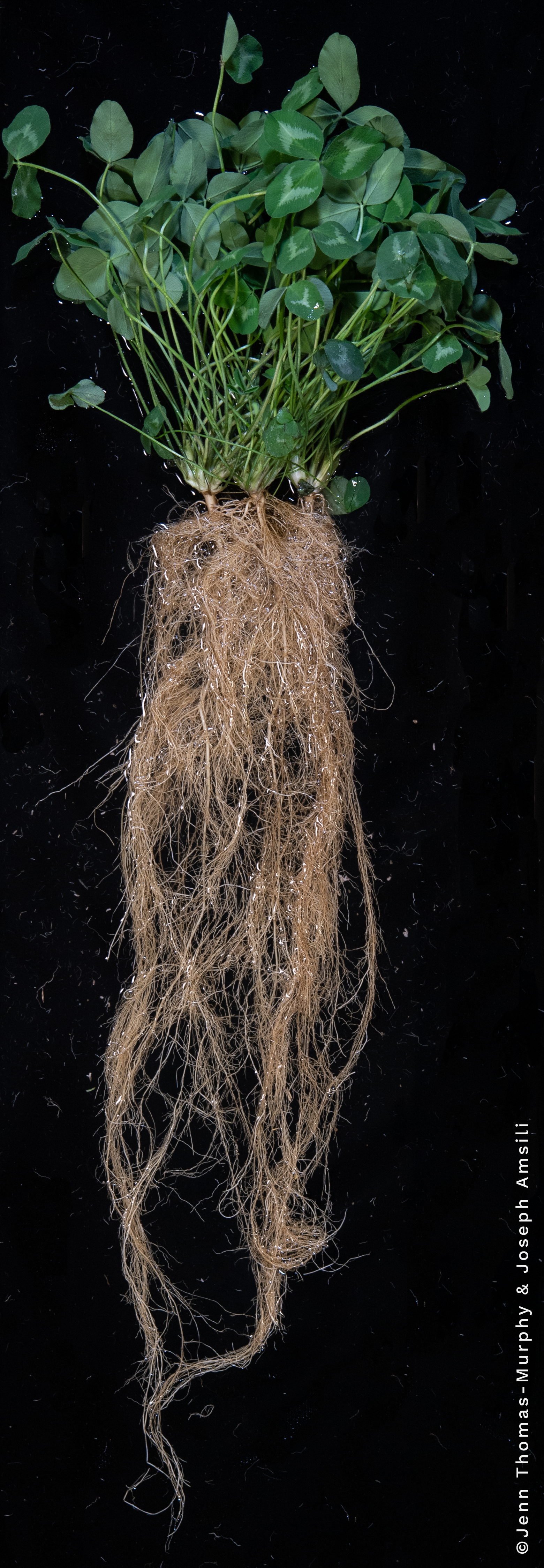
They are called a “cover” because they protect the soil from being exposed to the natural elements. They establish living roots in the ground and hold the soil in place, so that we don’t lose it to erosion.
Bare soil can also result in the death of microbial communities, which are vital for plant health.
Our cash crops, like wheat, are grasses, so we choose cover crops that are from a different plant family like red clover: a legume.
By alternating the plant families we create biodiversity. Legumes can also take free nitrogen out of the atmosphere and fix it in the soil for our next cash crop to feed on.
This way our farmers don’t have to rely on synthetic fertilizers, that leech into our waterways and cause devastating algae blooms in near and distant lakes.
-
Our farms use cover crops to fix nutrients into the soil.
If we need additional fertility, our farms only use organic, biological fertilizer such as chicken litter. These are recycled materials from existing agricultural systems.
Conventional farms rely heavily on synthetic nitrogen fertilizers, which are created in an extremely energy intensive process that relies on fossil fuels.
This Haber-Bosch process accounts for about 2% of both global energy production and carbon emissions.
Nitrogen fertilizers also contribute to nitrous oxide emissions, which have a global warming potential of 300 times that of carbon dioxide.
-
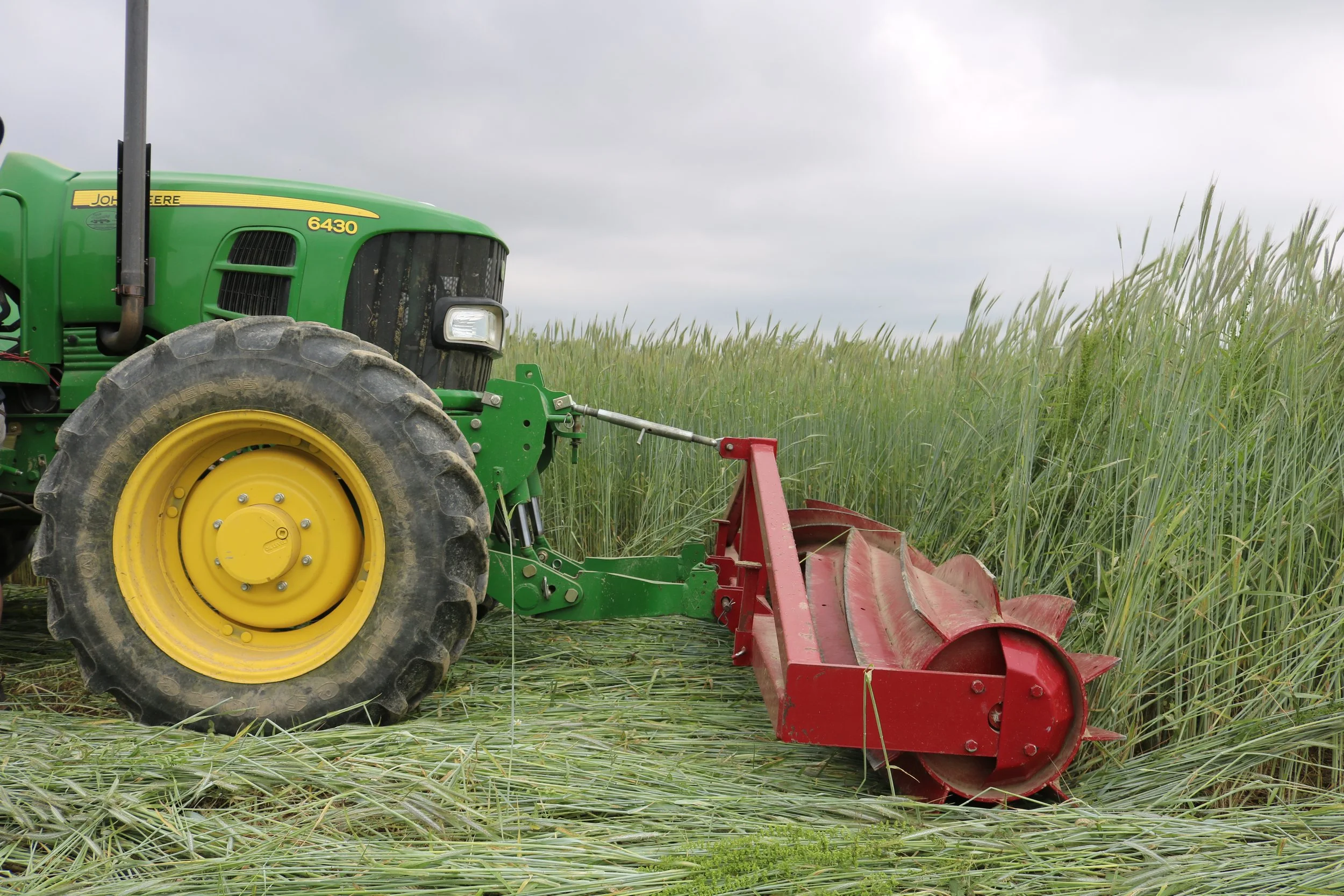
Tillage refers to any method of physically disturbing the soil. On a farm, this is done with a plow or discs, where you cut through the soil and turn it over.
On an organic farm that doesn’t use herbicides to kill weeds or cover crops, some amount of tillage is always necessary. However, the costs must be recognized and managed.
Excessive tillage can damage the delicate microbial ecosystem below ground, and the physical structure it creates.
ROC farmers are asked to document every time they use a tillage implement, and to plan for opportunities in their rotation to no-till plant, or to use shallow discs.
-
Both organic and synthetic fertilizer application is the primary source for nutrient water pollution and the creation of dead zones in our natural bodies of water.
Hilly farmland can contribute to this run off and soil erosion, if it’s not managed properly.
Strip planting on slopes prevents this soil loss, as well as keeping a vegetative perimeter barrier around the fields. This way plants and plant roots will absorb any excess water.
All of their other practices mentioned above help to create soil structure and aggregation. This increases the lands water infiltration and water holding capacity.
Excess rainfall on bare, unhealthy soil would puddle or pond on the surface, and roll to the nearest stream, taking loose soil and fertilizer with it.
Photo above is from the Rodale Institute’s Farming Systems Trial
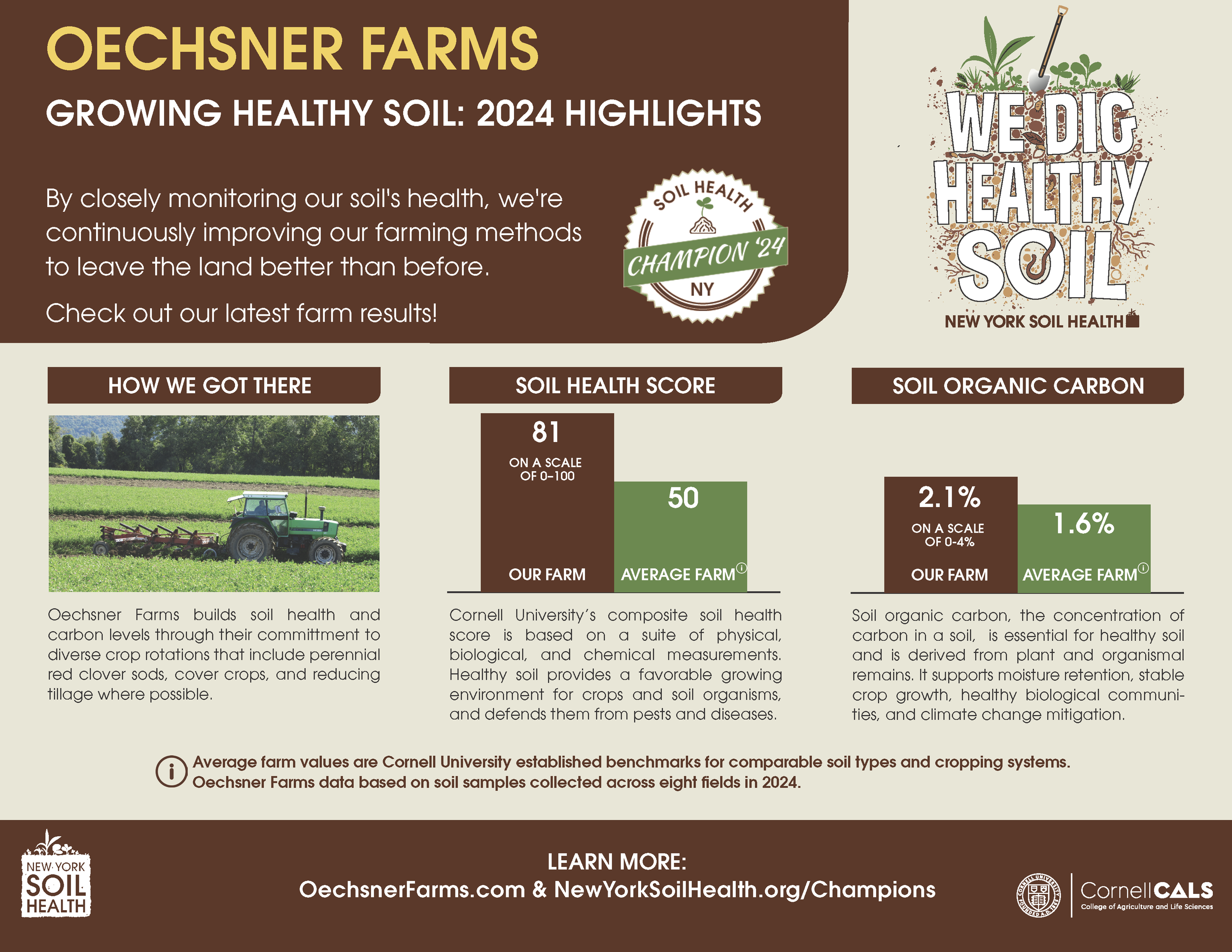

“Soil health is the continued capacity of the soil to function as a vital living ecosystem, that sustains plants, animals, and humans” - NRCS
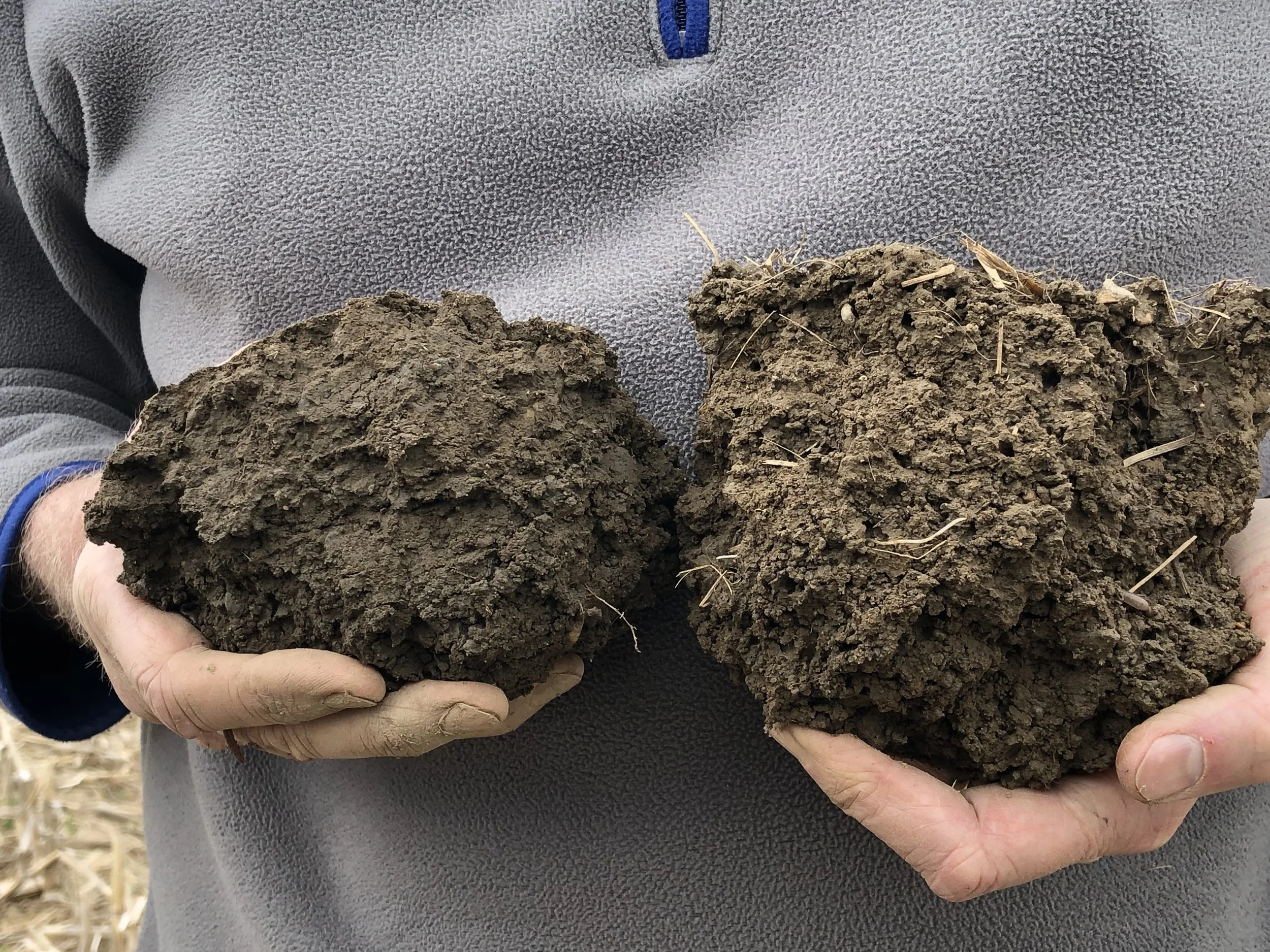
Photos courtesy of NY Soil Health and Oechsner Farms
Regenerative Organic Certified
Is an “Organic Plus” certification created by the Regenerative Organic Alliance. They require USDA Organic as a baseline, while adding higher benchmarks for the three pillars of their mission.
Soil Health - Animal Welfare - Social Fairness
We’ve talked a lot about the soil health pillar here, but go to their website to learn more about all three.
ROC Requires
Cover crops to protect and replenish the soil
Reduce and document all tilling practices
Protect natural watersheds from runoff
Use on-farm or local organic fertilizers
Protect native animal habitats
Increase biodiversity
Submit soil tests every 3 years to verify and test levels of soil organic matter
ROC Requirements
ROC Prohibits
Soilless systems like aquaponics
Synthetic chemical inputs
GMO inputs
Deforestation
The use of chilean nitrate
Fracking, mining, or extractive practices on the land
The use of liquid manure from CAFO’s
The use of pesticides, even organic, while pollinators are in flight, and or applied near natural bodies of water
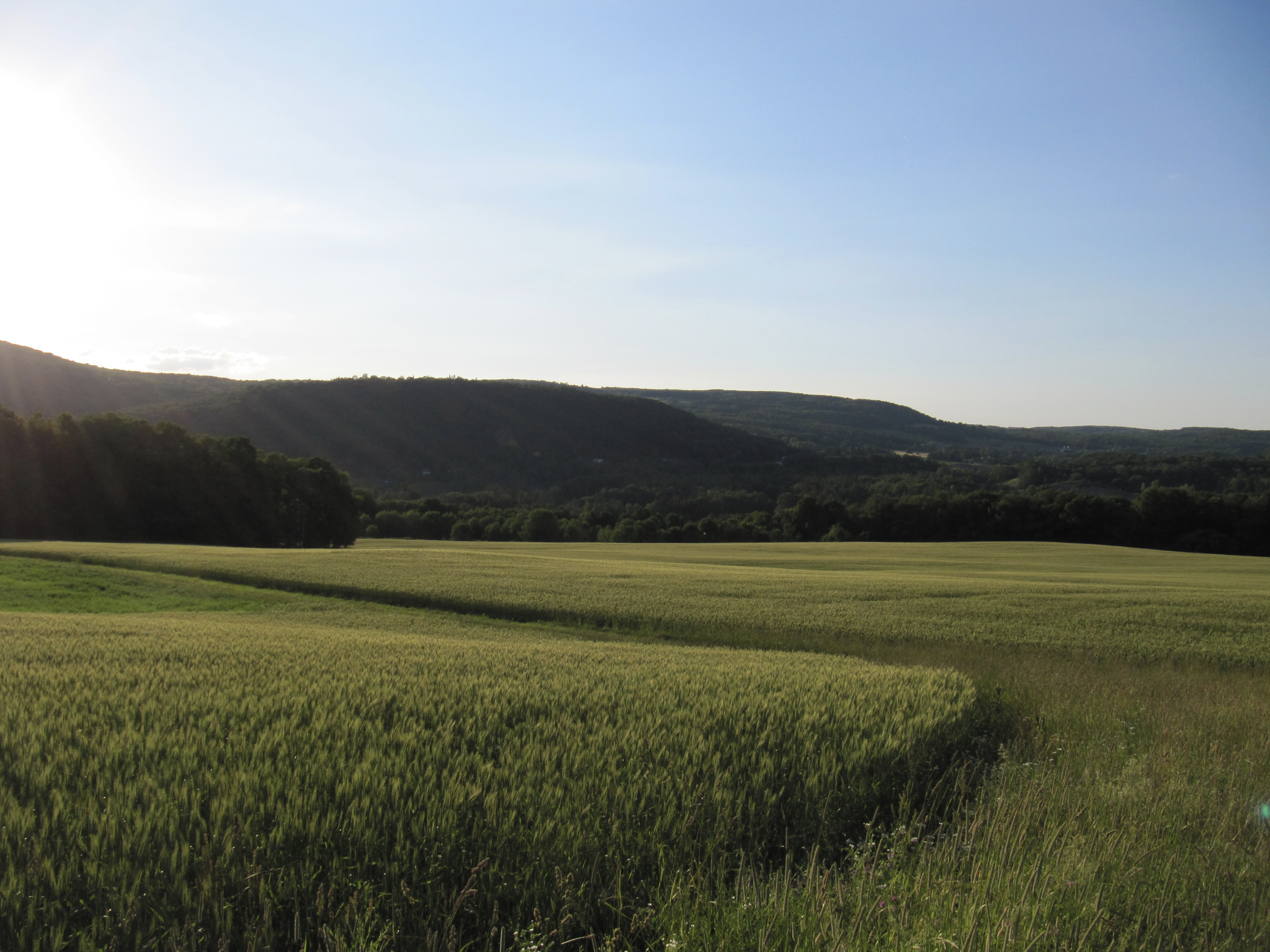
Agricultural Impact
on Climate
44% of the worlds habitable land is used for agricultural production
330 million acres in the US are planted to annual crop each year
Well managed soil can capture, store, and sequester up to 1 Ton of carbon per acre in the form of aggregated organic matter.
Agricultural practices have a massive carbon footprint and contribute to 24% of Global Green House Gas emissions
By storing carbon in the soil, well managed farms have the potential to be one of the largest carbon sinks— the largest in terms of developed land.
Sequestration:
The process by which atmospheric carbon dioxide is taken up by trees, grasses, and other plants through photosynthesis and stored as carbon in biomass (trunks, branches, foliage, and roots) and soils. Increased carbon sequestration may be achieved through no-till or low-till practices, agroforestry, reforestation, or the use of biomass-containing amendments.
Carbon Sink:
Anything that absorbs and stores atmospheric carbon. The biggest carbon sinks are the oceans and forests — undeveloped wild and natural ecosystems.