Bringing back regional wheat
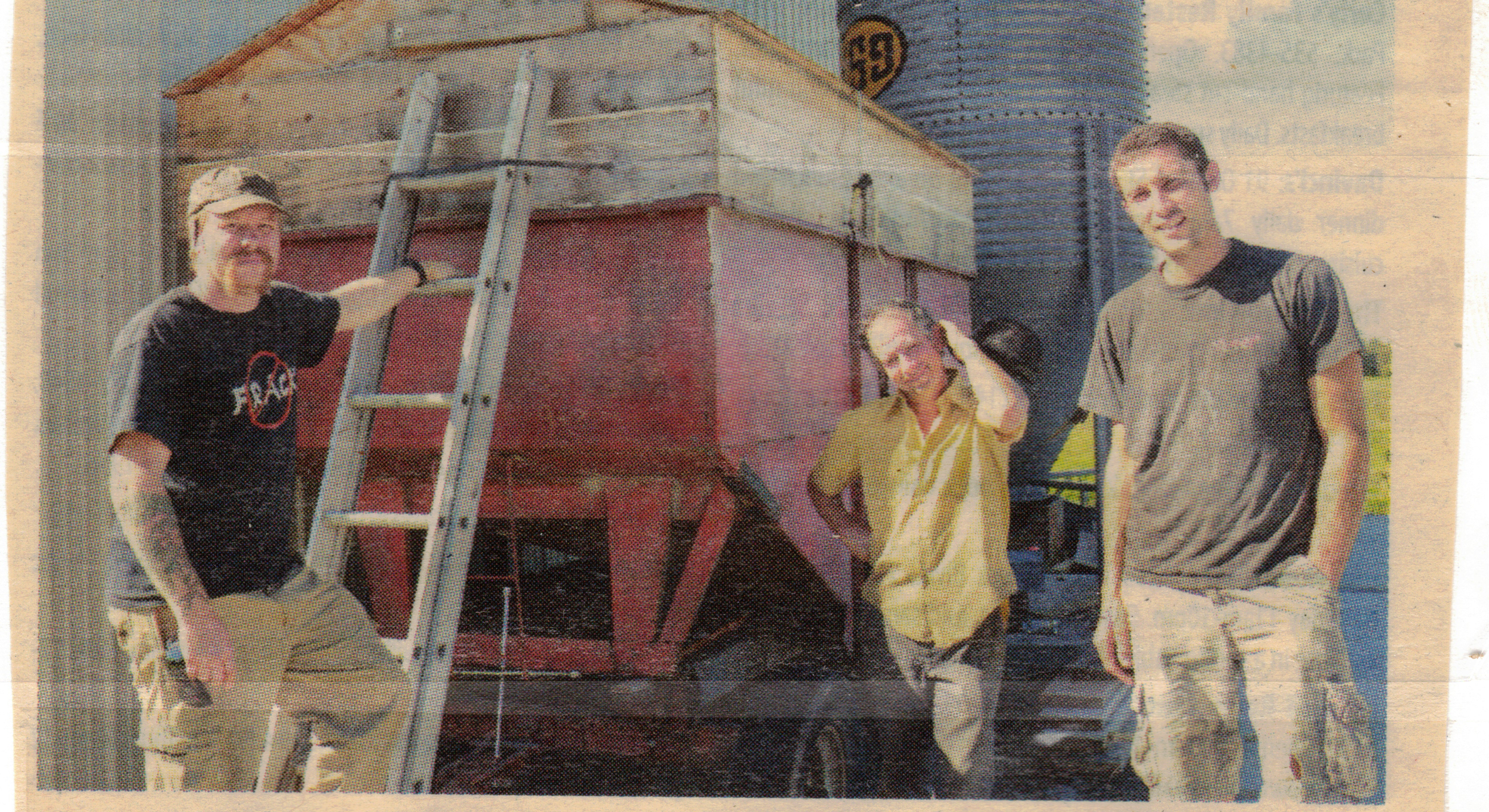
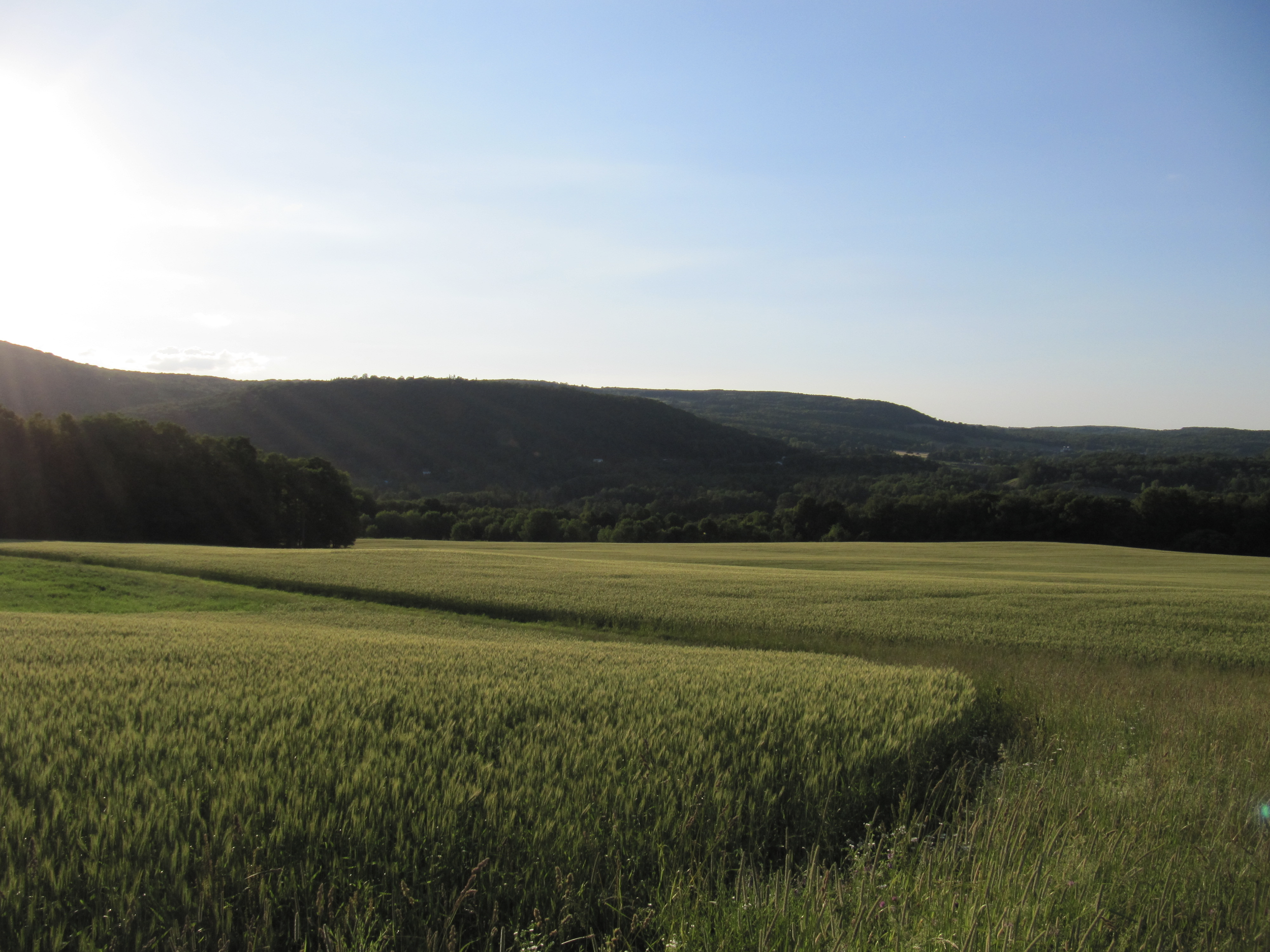
We stood in our muddy fields, looking at the ghosts of wheat fields past. Before the railroad, New York grew its own wheat. It shipped to markets by steamboats and barges, and was milled by water power. Many towns had their own local flour mill. Bakers knew their local miller and they worked together. Most of that production moved out west to the grain belts long ago, where the farmland was vast and flat.
Today, a group of five mega-mills produces about 85% of the flour in the US. This consolidation has reinforced relationships of alienation, as flour production moved far away from the baker. Over the last thirty years, there has been a resurgent interest in reestablishing our lost regional food systems and more importantly, rebuilding relationships of community around baking and milling. Because it’s not the system that makes these things happen— it’s the people.
Finding the right people
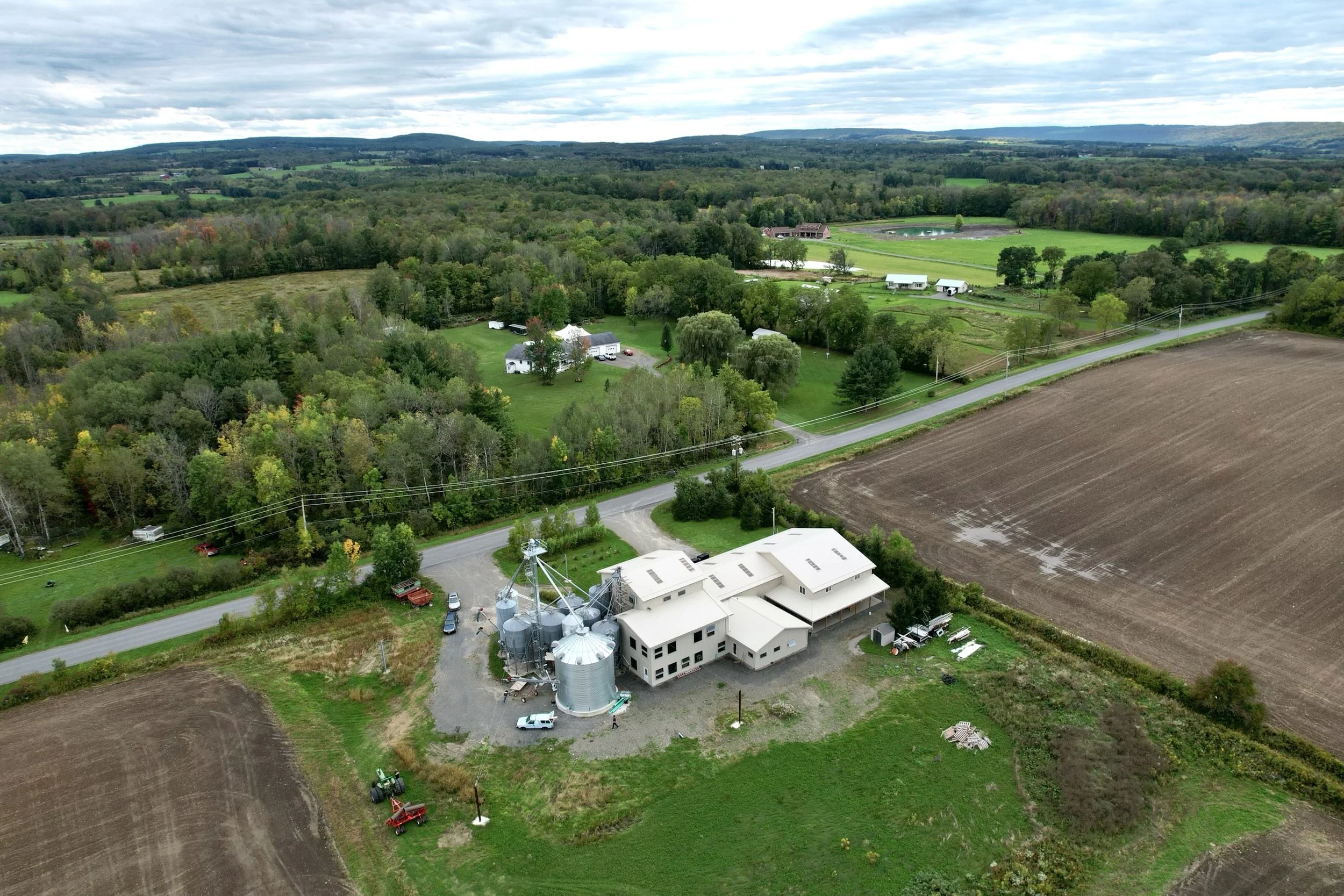
Photos above by : Ed Dittenhoefer (Top) and Dave Katz
Thor Oechsner and Erick Smith were growing grain for organic dairy cows, but their dream was to grow wheat for bakeries and kitchens. To make this happen, they knew they needed some help. They looked to some of the most experienced grain farmers in the Northeast for advice. They teamed up with a distributor who was really passionate about small farms. And, they found an eager young partner who wanted to make an impact on local agriculture.
This hard work and collaboration led to a farmer-owned business that they called Farmer Ground Flour, a model that supports sustainable farming practices and doesn’t rely on unsustainable commodity prices. Thor, Erick, and their new miller Greg Russo were on their way, inspiring new partners as they went along.
We have learned a lot by experimentation and from the many brilliant people who share our mission. We learned that in the right caring hands, the fertile land of NY State is plenty capable of growing wheat like it did 200 years ago. We learned that we can once again rely on our own local grain supply as long as we keep taking care of our land.
We now proudly mill for over half a dozen regenerative organic farms, as a processing partner who increases the value of their grains. We’re also thrilled to see the growing network of small mills, righteous farms, artisan bakers, and values based distributors all across the country — all because of the people who cared enough to make it happen.
Photo by Rachel Lodder
Our co-conspirators are brilliant and thoughtful.
We share the same values, and together we honor the age-old connection of farmers, millers, and bakers.
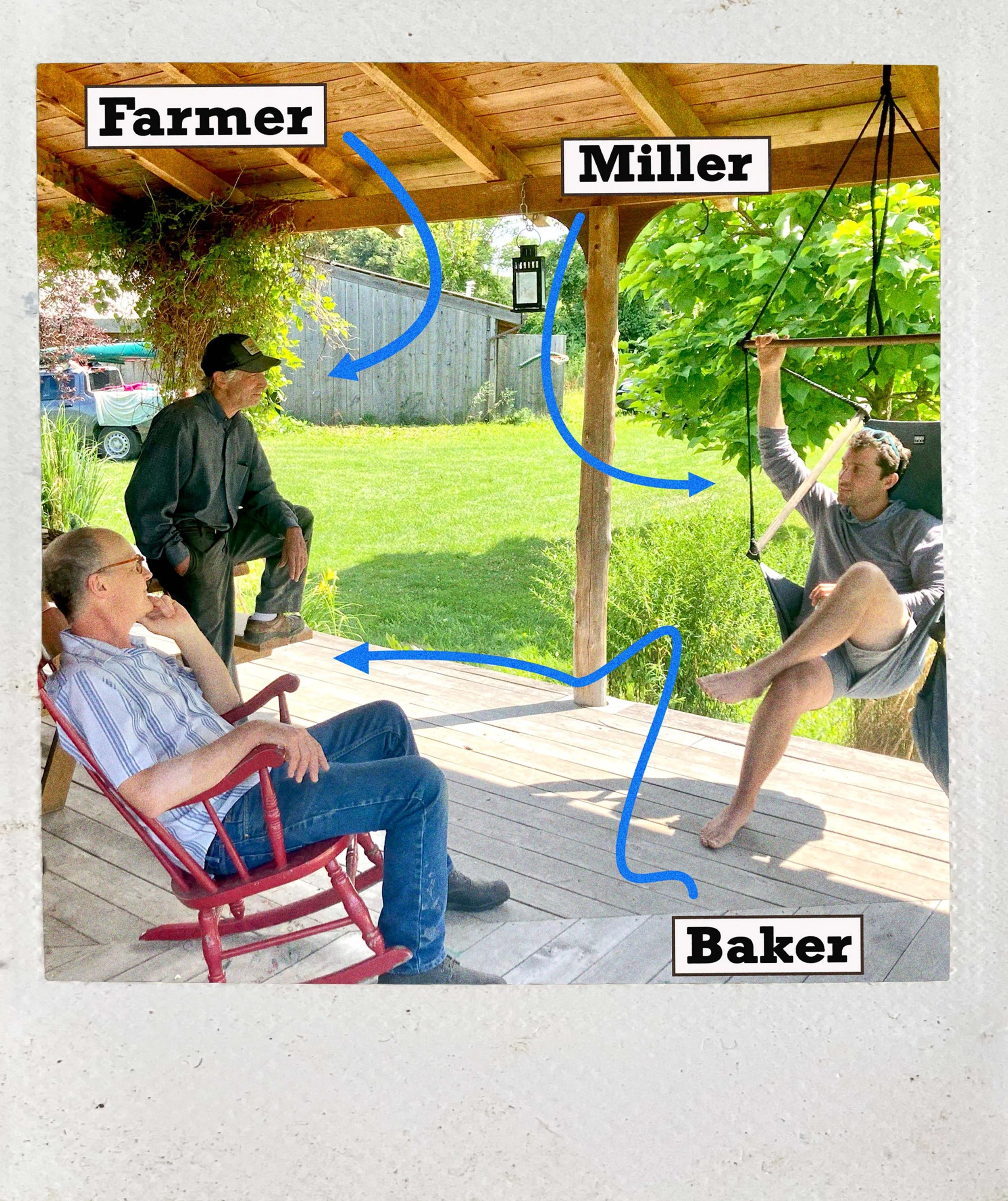
We listen to each other
For generations all over the world, farmers, millers, and bakers were cornerstone relationships of our communities.
Local flour requires a little more listening. As millers, we hear about what’s happening in the field. We test the grain. We blend the harvests from different fields. We feel the texture of the flour as it comes off the mill. We connect these conditions to the what the baker tells us about the fermentation of the dough. We all give feedback to each other about our experiences.
It’s a wonderful and dynamic art as much as it is a science. We strive for consistency while prioritizing sustainability, nutrition, and flavor.
Choose one of the links above to learn more about each important part of our triumvirate.
Follow Our Journey
From Bootstrap Idea to
Fully Blossomed Flour Mill
-
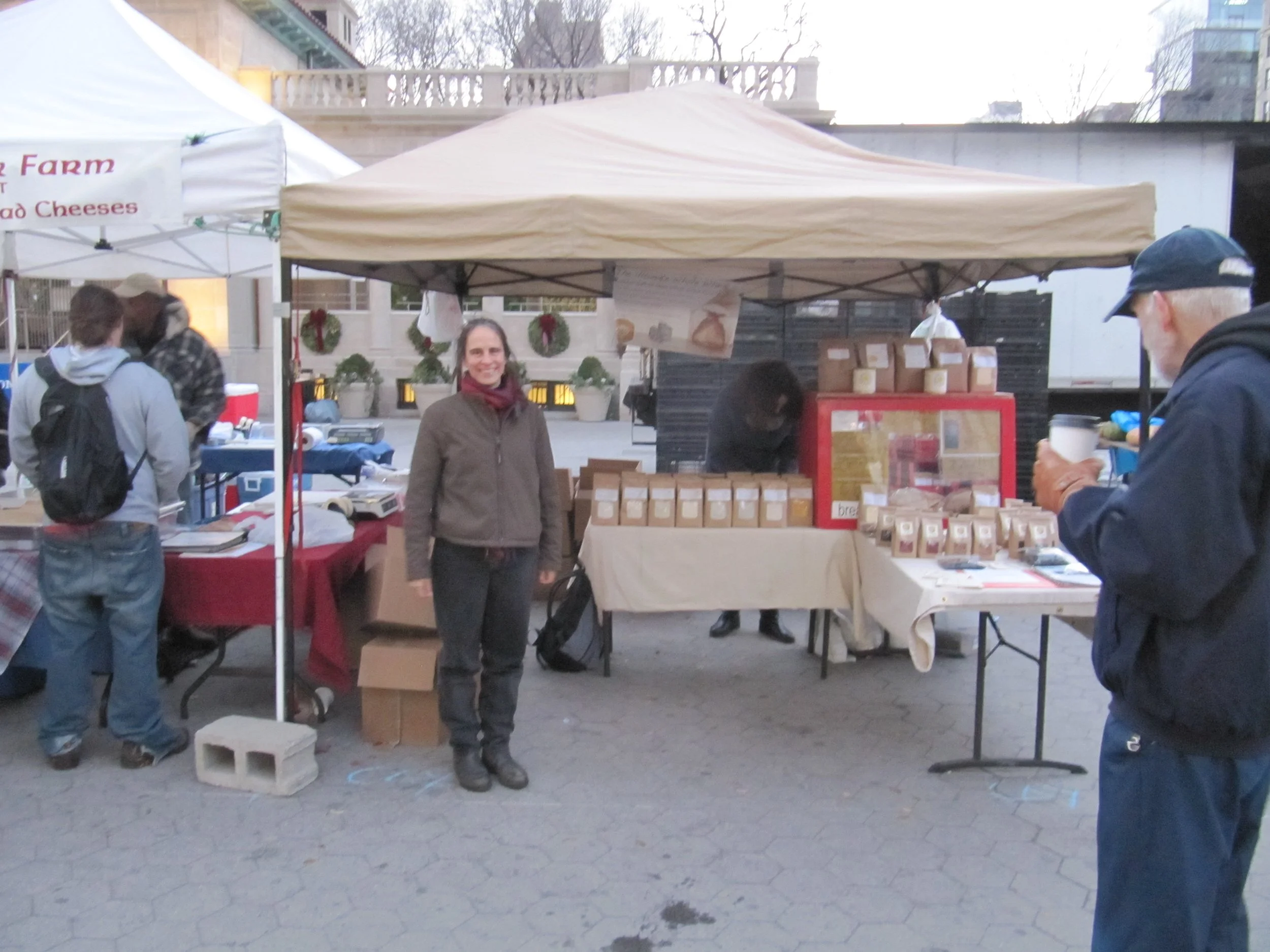
![A woman standing in front of a market stall with jars displayed on tables. Other people are shopping and browsing nearby. The scene takes place outdoors on a city street.]()
In the 2000’s there had been a lot of progress in the local food movement. “Locavores” wanted to be able to trace where their food was coming from, and know how it was grown.
Photo courtesy of Oechsner Farms
-
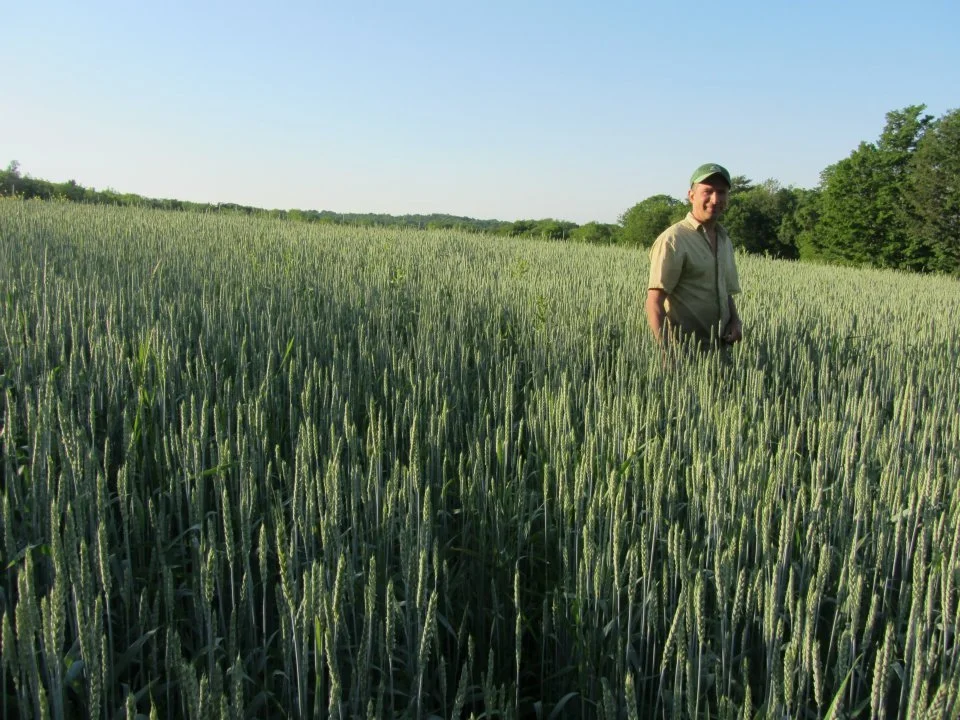
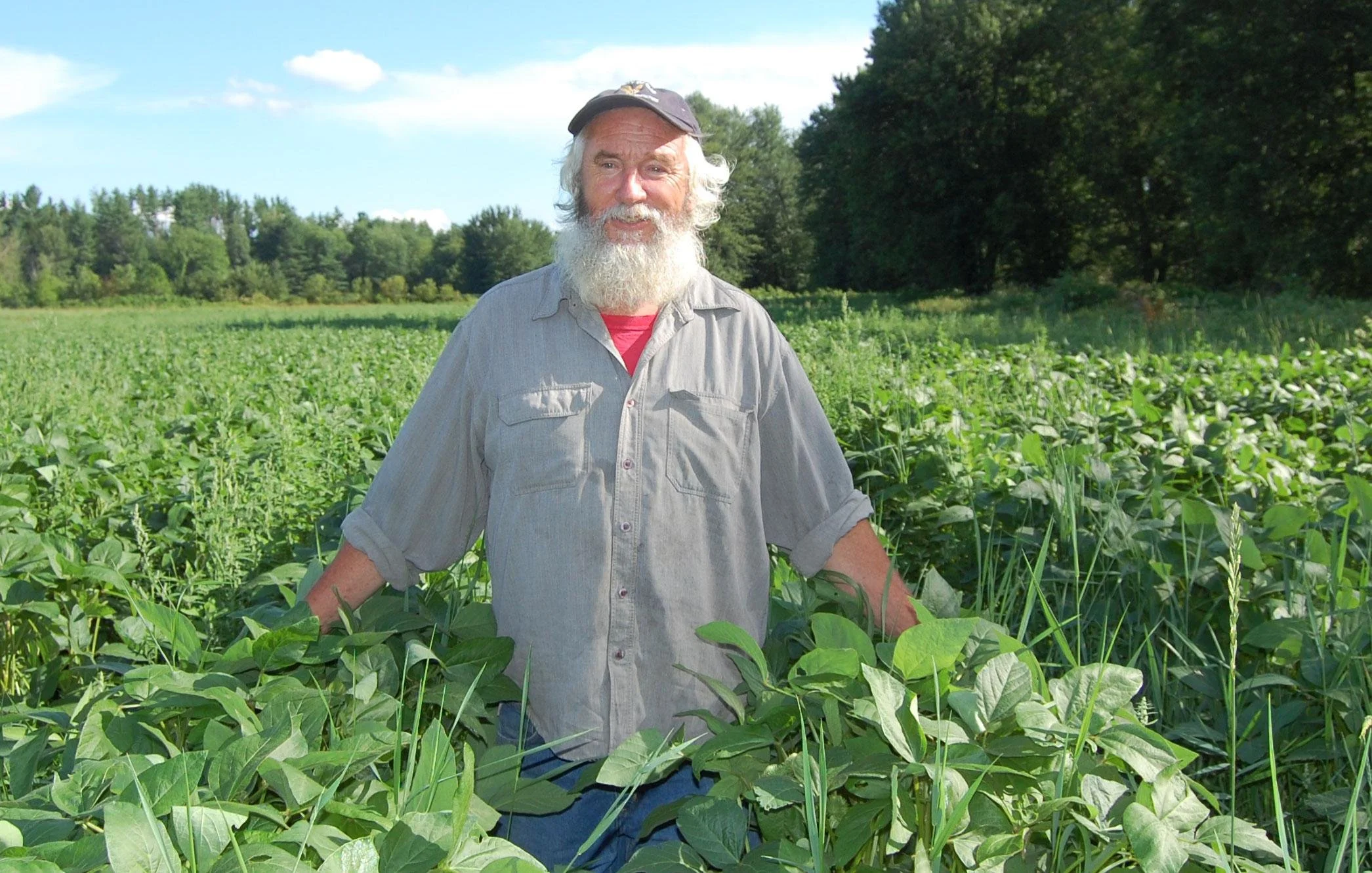
![A man standing in a lush green wheat field on a sunny day with trees in the background.]()
Vegetable CSAs were flourishing nationwide, milk and meat farmers were gaining support and visibility locally, and grain farmers were just starting to think about how to become part of this movement.
Photo by Rachel Lodder
-
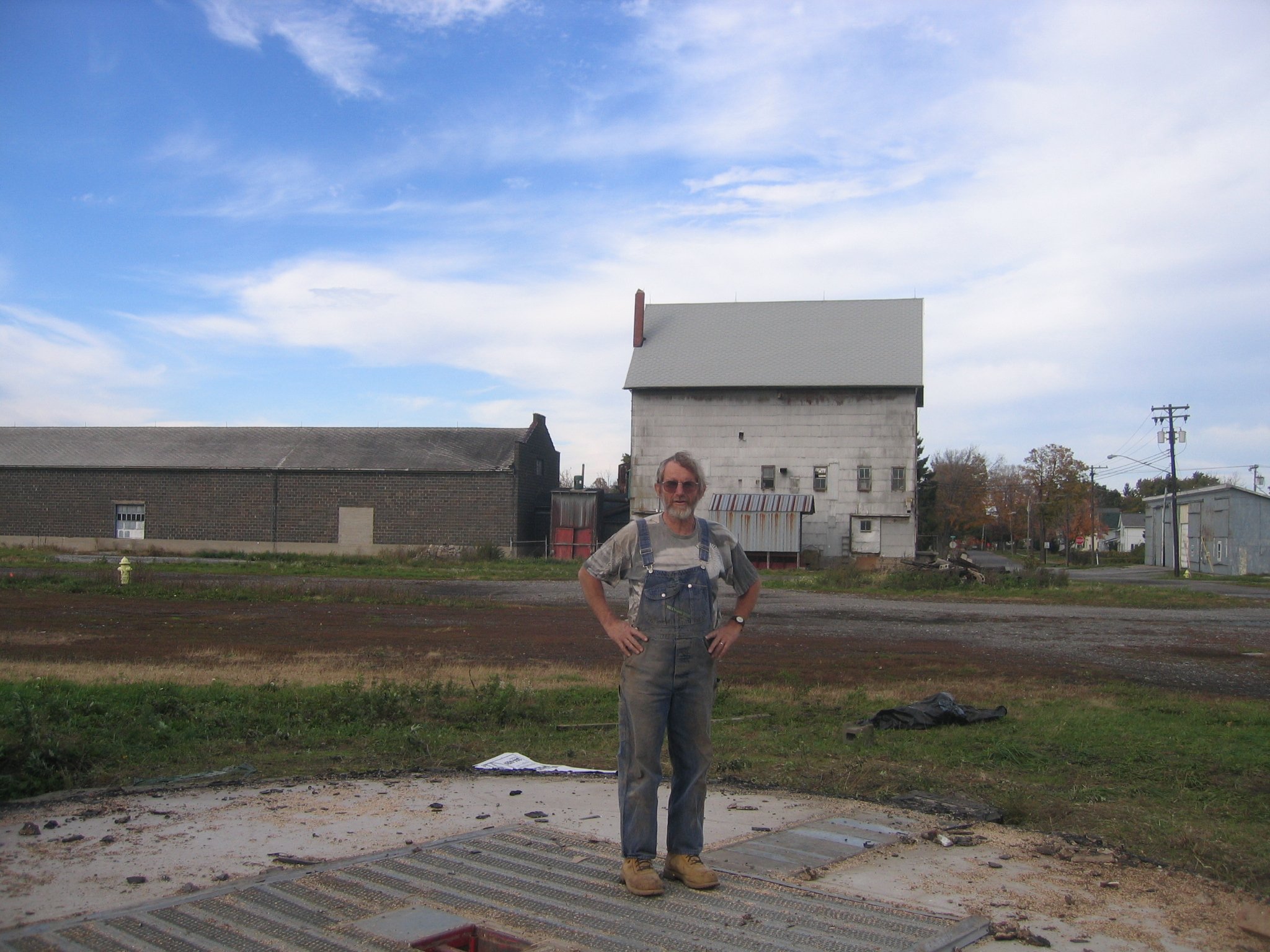
![A man standing outdoors in front of an old building with a metal roof, wearing overalls and sunglasses, with a partly cloudy sky in the background.]()
Erick Smith of Cayuga Pure Organics was one of those farmers thinking about how to process his crops for a local market.
Photo by Rachel Lodder
-
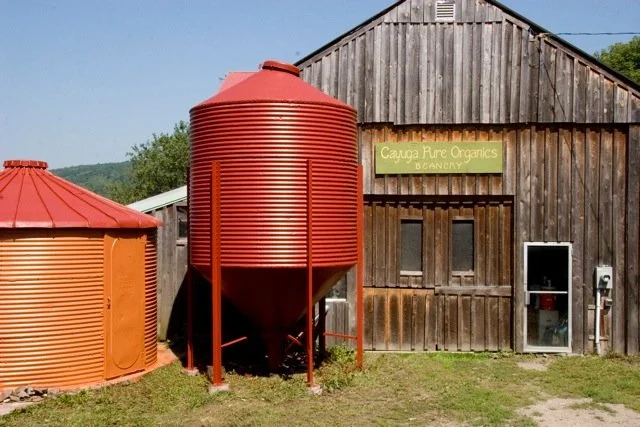
![A rustic farm building with a green sign reading "Cayuga Pure Organics" and two red grain bins, one cylindrical and one conical, situated on a grassy area.]()
Erick and his partner Dan Lathwell had started Cayuga Pure Organics, and quickly, farmers markets in the city and local restaurants began asking them to grow organic beans and food-grade grains.
Photo by Rachel Lodder
-
![A man driving a green tractor across a farm field with a tractor dashboard visible.]()
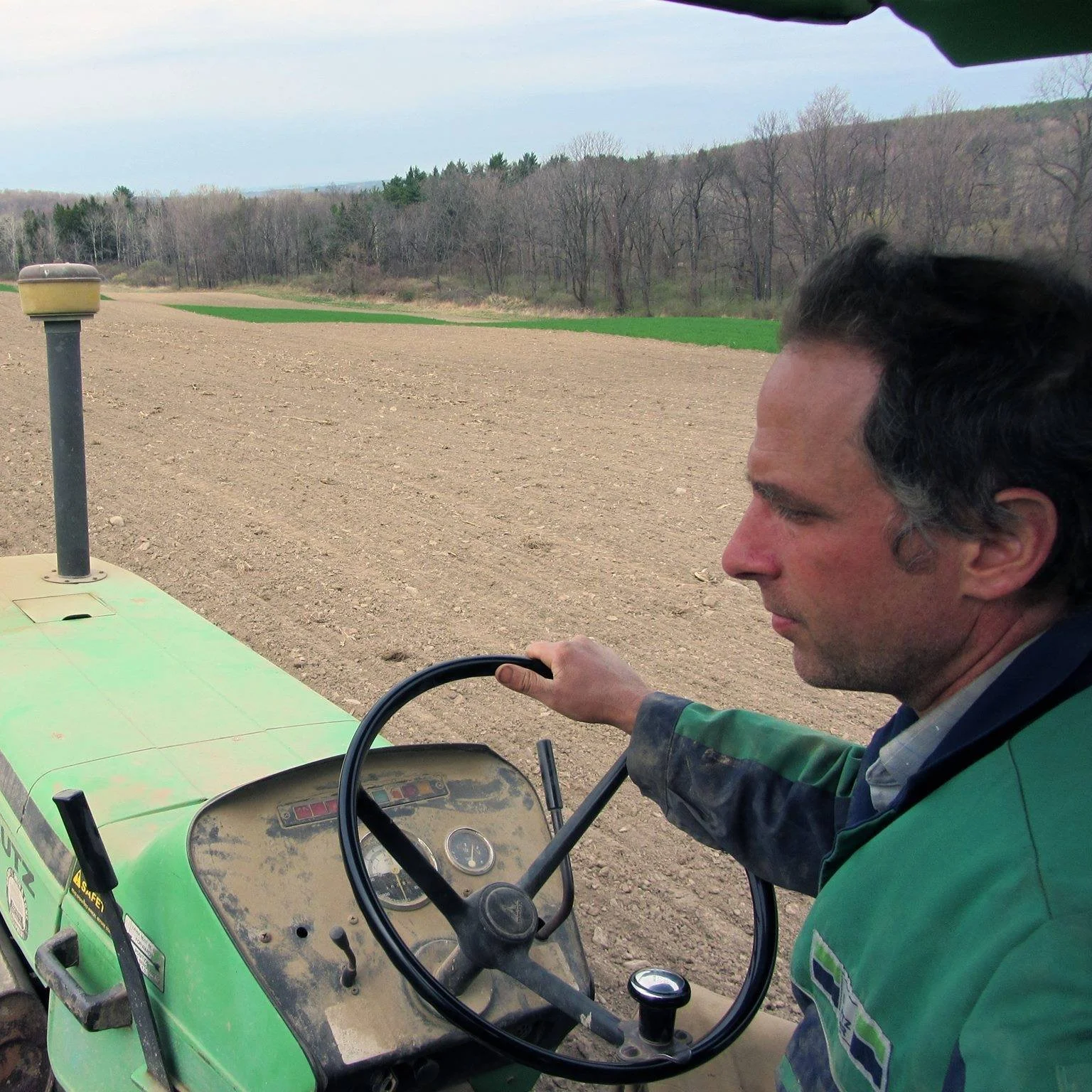
In Thor Oechsner he found a collaborator. Thor was growing wheat in the rotations of his organic farm, and thinking back to his days as a child, when he would run around his grandfather’s bakery.
Photo by Rachel Lodder
-
![Three men in a bakery, two holding bakery trays, one kneeling on the floor in front of an oven.]()
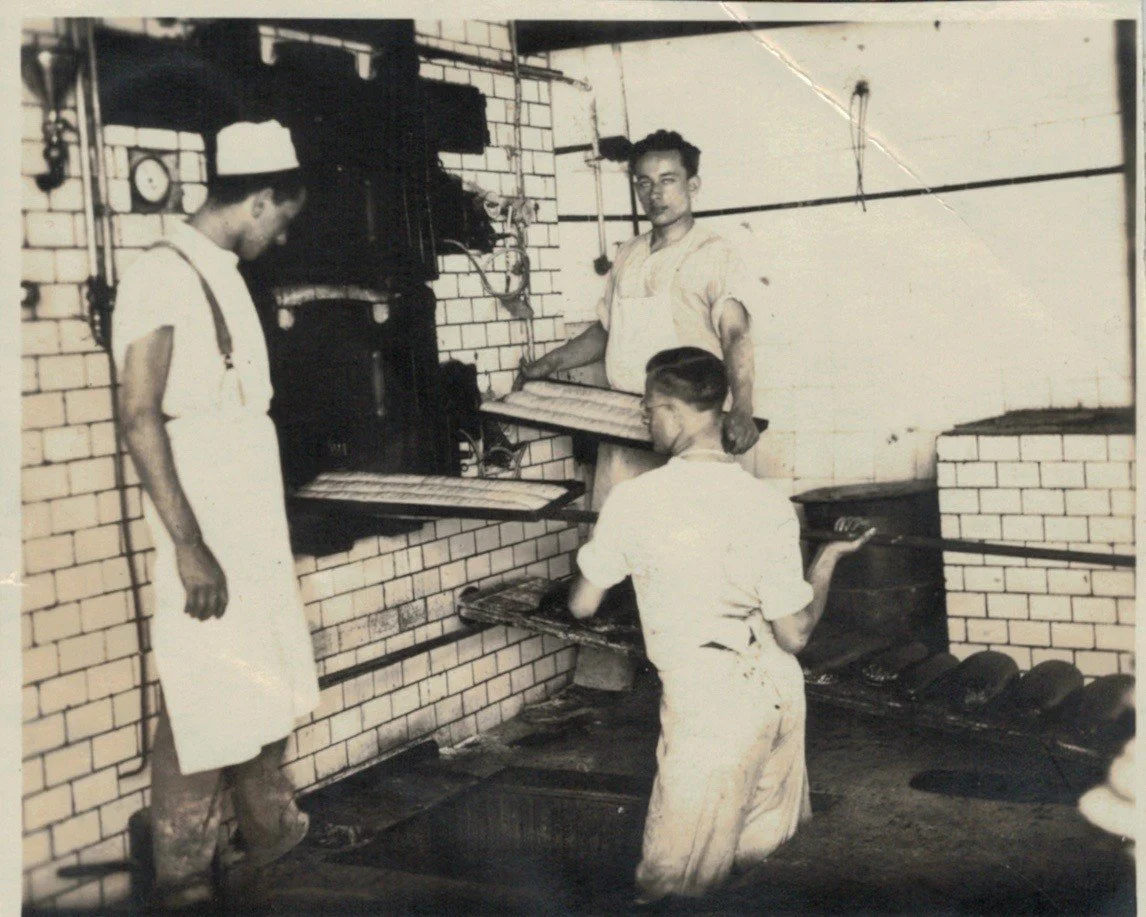
Thor's grandfather, Karl Oechsner, grew up at the Oechsner Gasthaus in Zeil-am-Main. He apprenticed as a baker in Germany as a young man and, after coming to the US in 1928, was head baker at the Sing Sing prison. The family story is that after some uprising by the prisoners, his wife made him quit. He then worked at Ascherman's Bakery in Ossining, where a young Thor would come to visit.
Photo courtesy of Oechsner Farms
-
![Empty bakery and delicatessen storefront with window displays and signage.]()
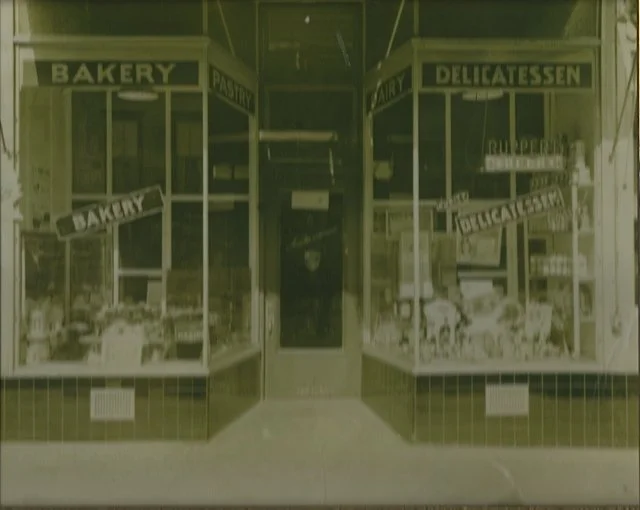
With those memories of being covered in flour and the delight of eating his grandfather’s old world bread, Thor and Erick decided they should look at growing more wheat, and producing flour with it. This could increase the value of their grain, above what they were getting from the organic dairy feed market.
Photo courtesy of Oechsner Farms
-
![A young man wearing a hard hat and apron tending to a group of turkeys, feeding or inspecting them inside a barn or enclosure.]()
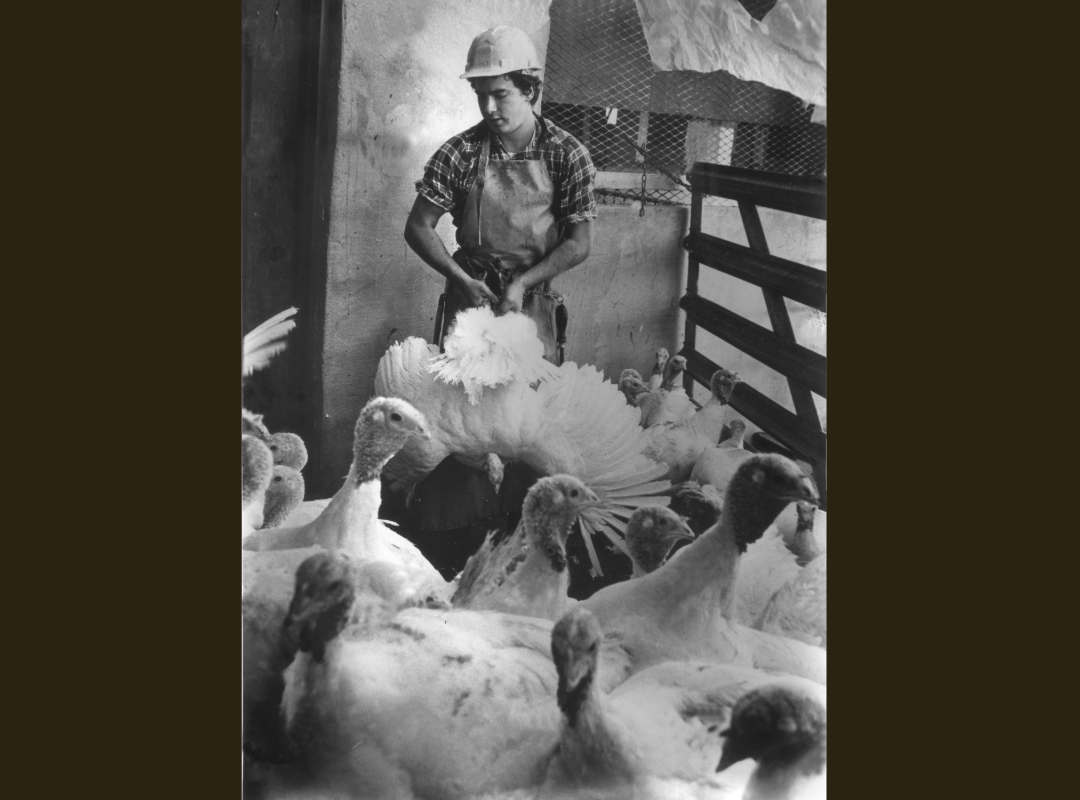
As a teenager, Thor worked at Hemlock Hill Farm in Peekskill, NY. That farm survived by opening up a slaughterhouse to process and market it’s own livestock. He would have to create a similar value-added processing operation for his grains, if he wanted to succeed as a sustainable farmer.
Photo courtesy of Oechsner Farms
-
![Industrial machinery used for processing or manufacturing, featuring large metal rollers, belts, and belts in a workshop setting.]()
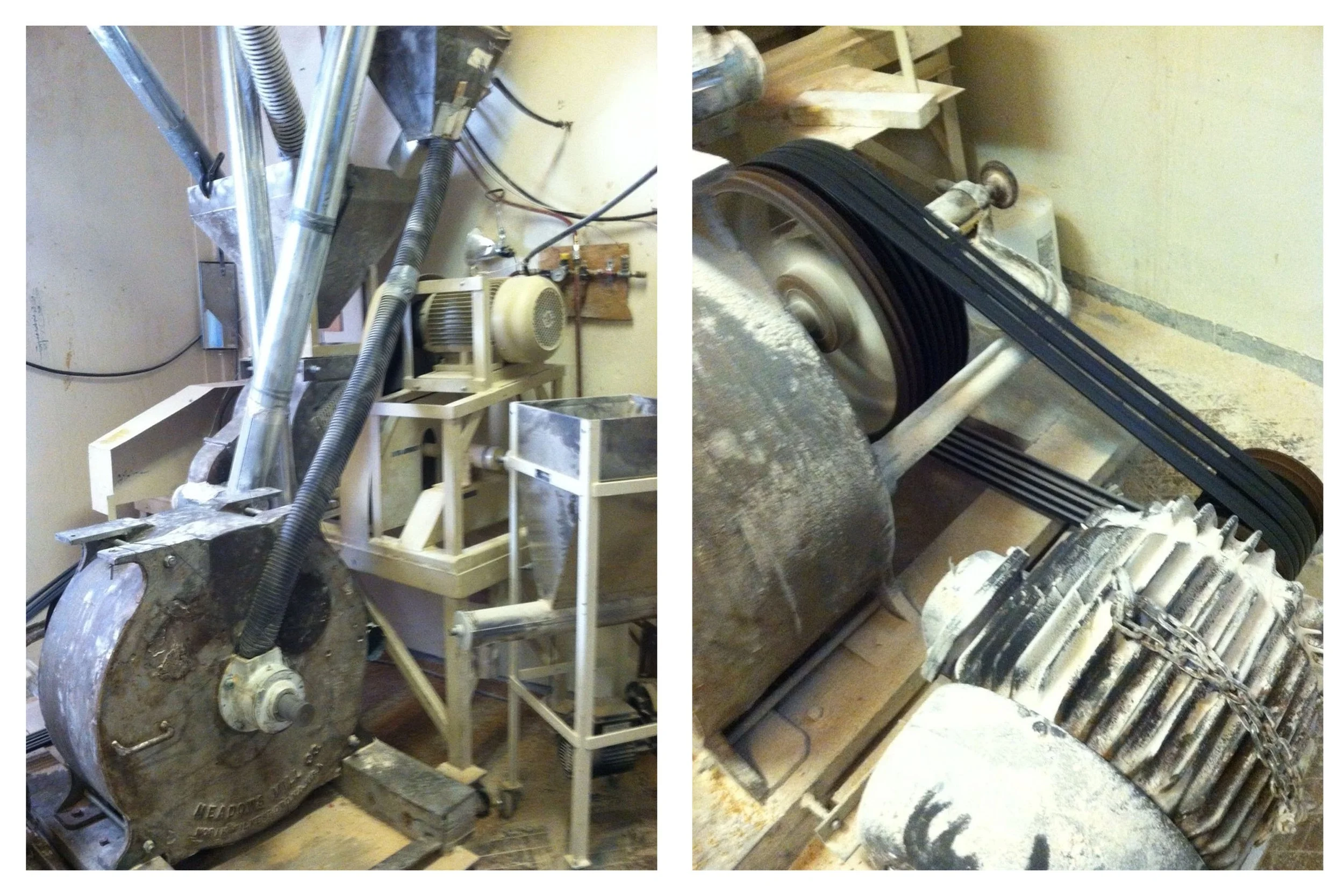
In 2007, Thor and Erick purchased a small Meadows stone mill from an ad that was placed in a farming newspaper. The mill sat for almost two years, collecting dust in Thor’s barn. It was clear that they needed a motivated partner to help them take on this work.
Photos by Michelle Russo
-
![Two men talking next to a green tractor outside a farm building, with one man sitting on the tractor and the other standing beside it.]()
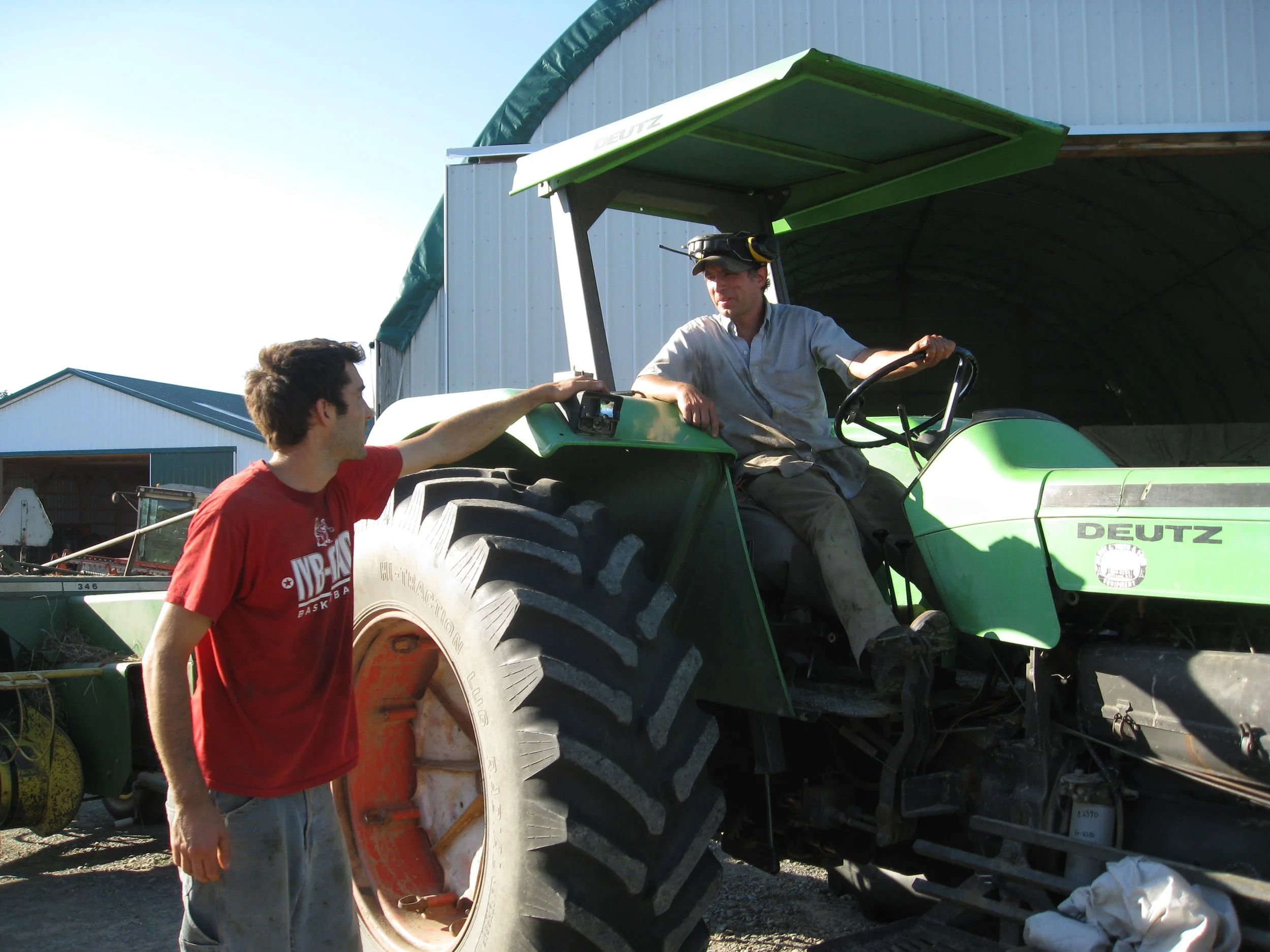
Thor and Greg Russo met through a class project; Greg's farm business management class at Cornell required undergrads to find a real farmer and do a business enterprise budget. Together they analyzed the cost/benefit of purchasing a spelt dehuller for Thor's farm. The spelt dehuller didn't get purchased, but the project sparked a friendship that led to the creation of Farmer Ground Flour.
Photo by Rachel Lodder
-
![A man standing on the back of a truck with stone mill mounted in the bed of the truck, wearing a beanie and a long sleeve shirt, inside a barn or garage with a wooden ceiling.]()
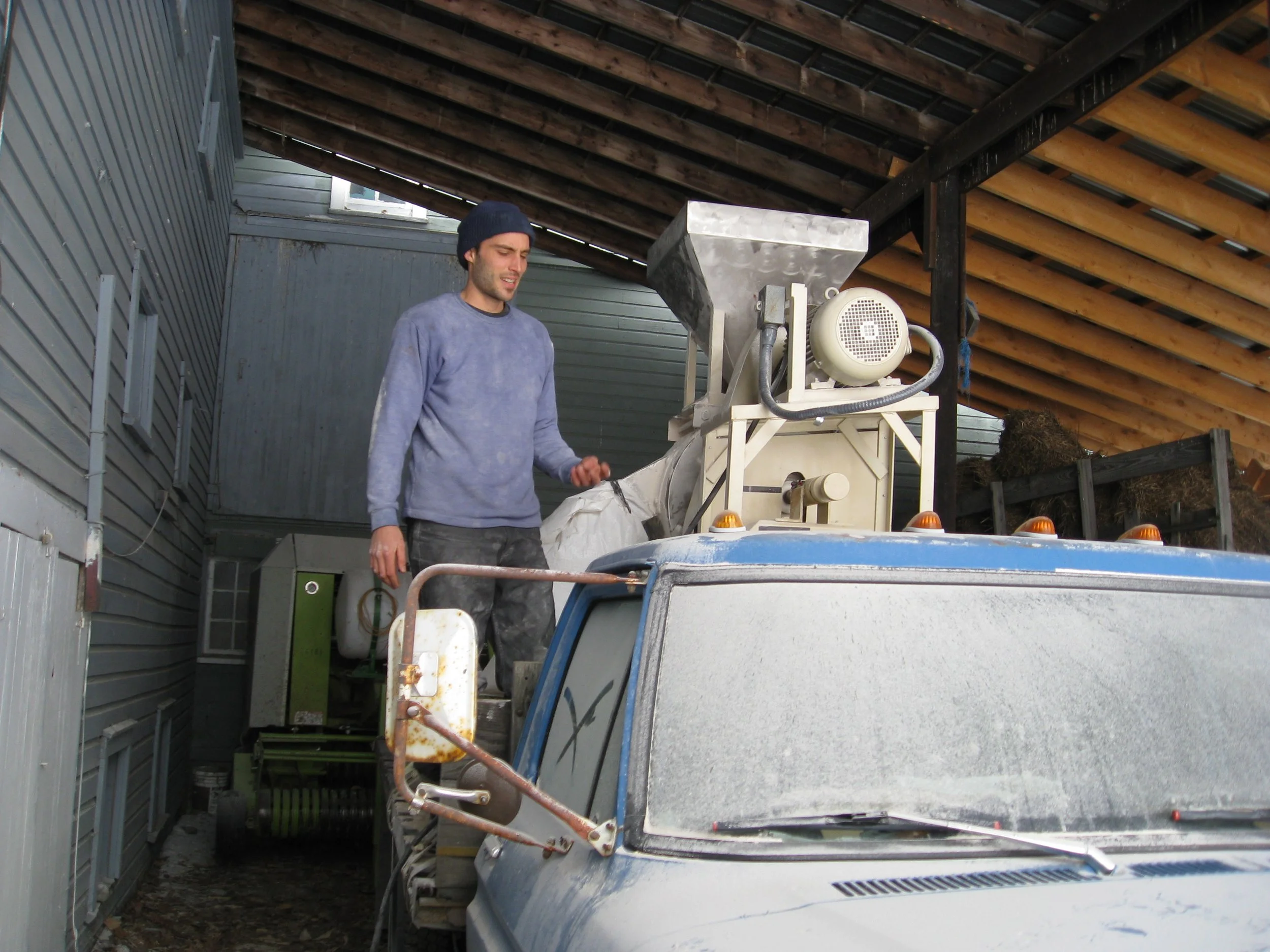
That Meadows mill got fired up for the first time outside of a barn on the back of an F350 flatbed, and we've been grinding even since.
Photo by Rachel Lodder
-
![A man with gray hair smiling and sitting in a kitchen surrounded by shelves filled with glasses, bottles, jars, and kitchen items.]()
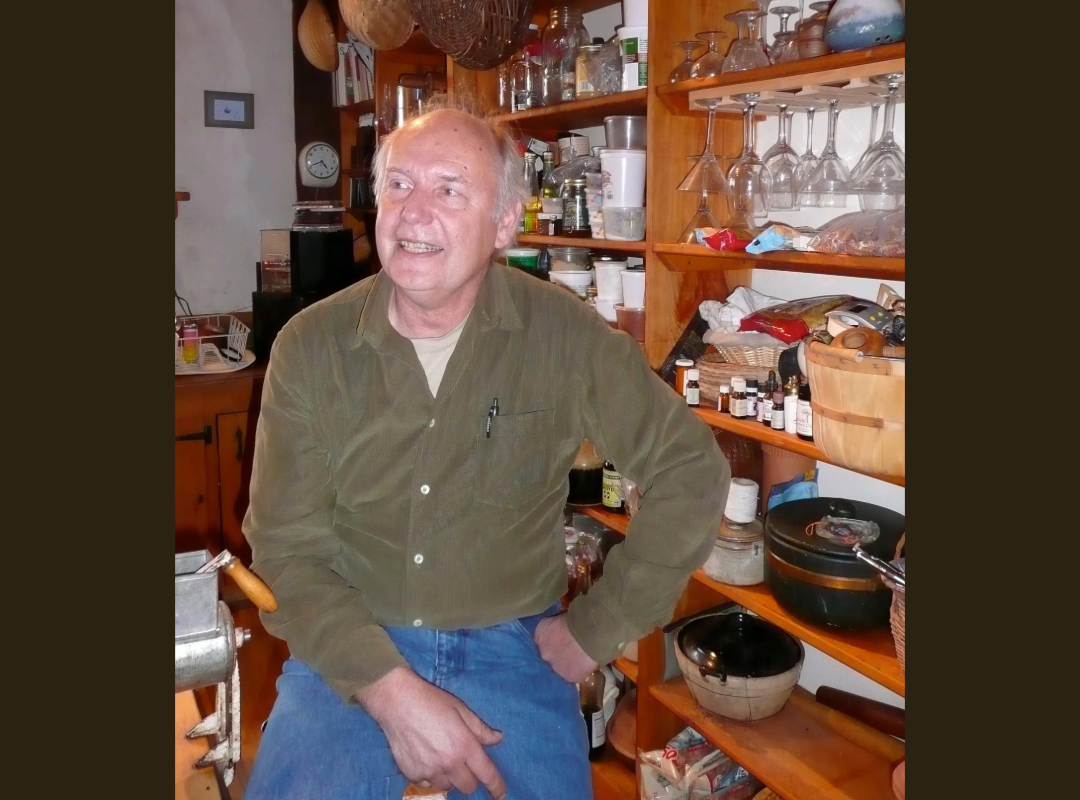
Gary Redmond of Regional Access (our largest distributor) gave us our first home in their old warehouse. Gary had been championing local food since the 80’s. Without his passion and drive, many people in the state would not have been connected to small sustainable farms. His work was critical and inspirational for creating local markets.
Photo courtesy of Regional Access
-
![A man wearing a blue beanie and red plaid shirt sorting brown paper bags on a porch with various wooden planks and buckets, in front of a house with a wooden porch and some trees in the background.]()
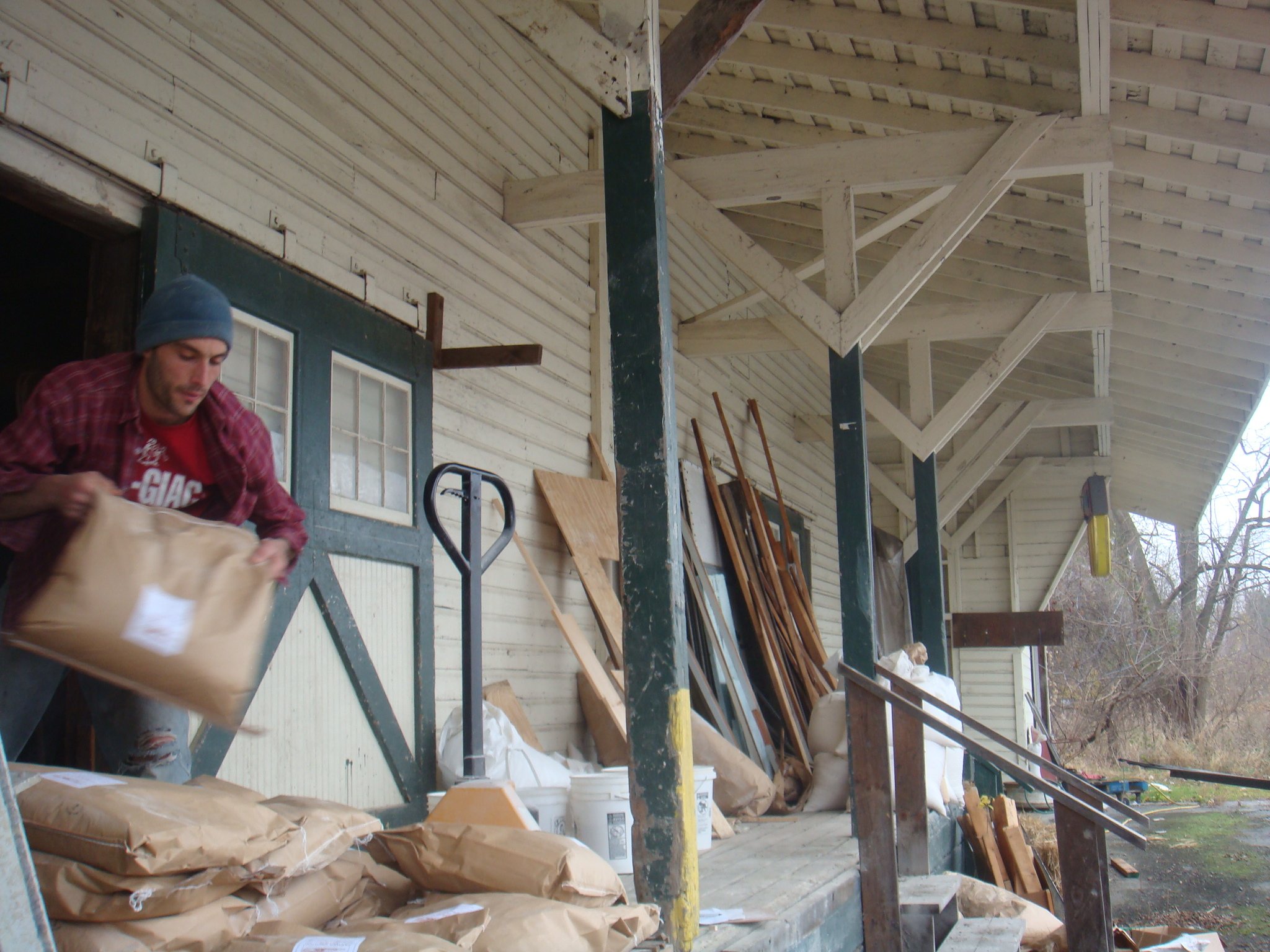
In 2009, Greg milled 50 tons of flour in the backyard of Regional Access. And Peggy Aker of Macro Mamas tolerated our sifter shaking the whole building!
Photo by Laura Mol
-
![Two men standing near a truck in a warehouse or garage with a large bag of material on the bed of the truck. The man on the right is wearing a mask, gloves, and a beanie. The man on the left is wearing a red hoodie and jeans.]()
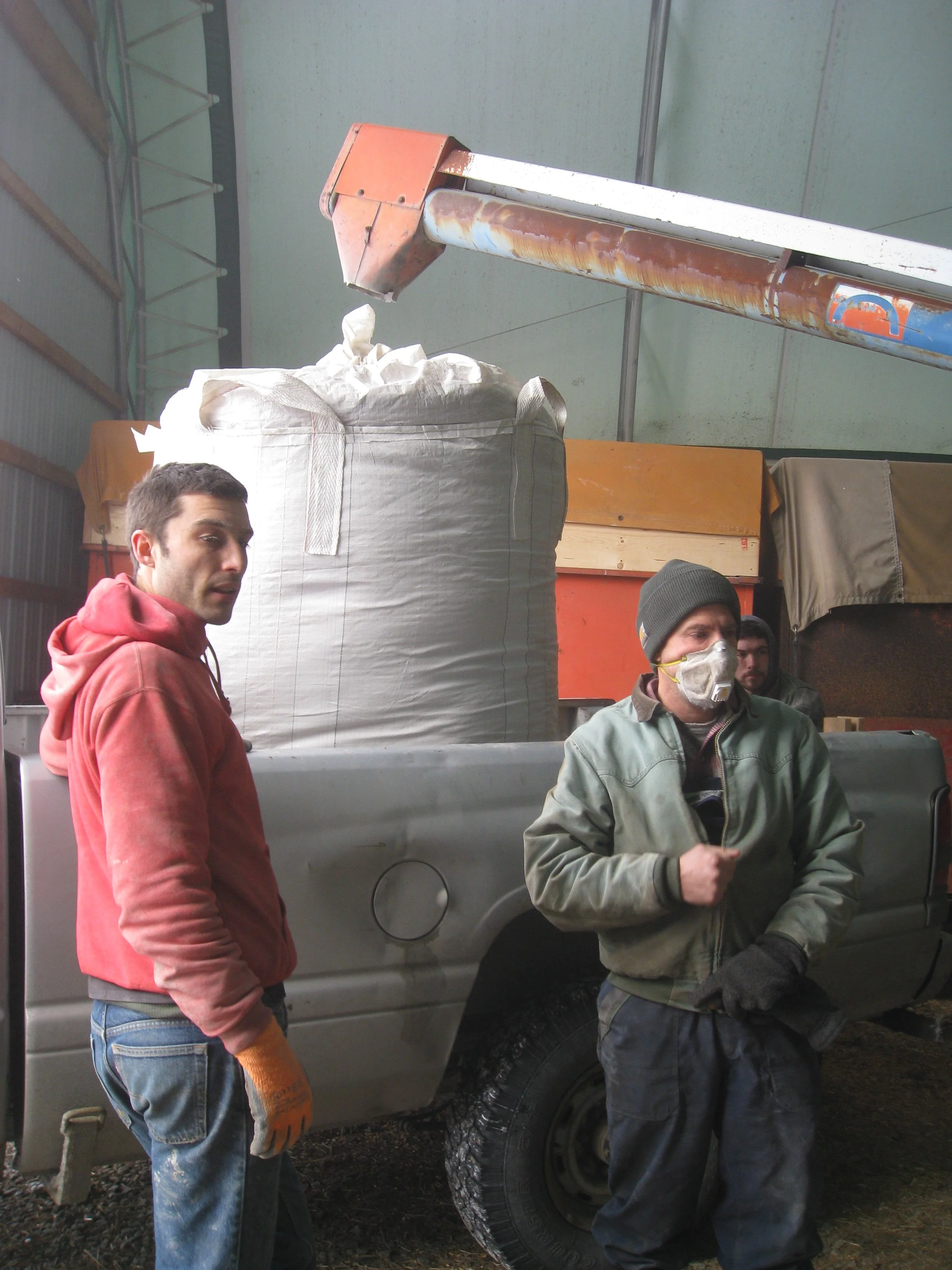
That first year was spent transporting grain in his undersized truck and carrying sacks of grain up ladders.
Photo by Rachel Lodder
-
![A man wearing a baseball cap, gray t-shirt, and jeans is using a red handheld plaster sprayer, standing in front of a woodworking machine in a workshop.]()
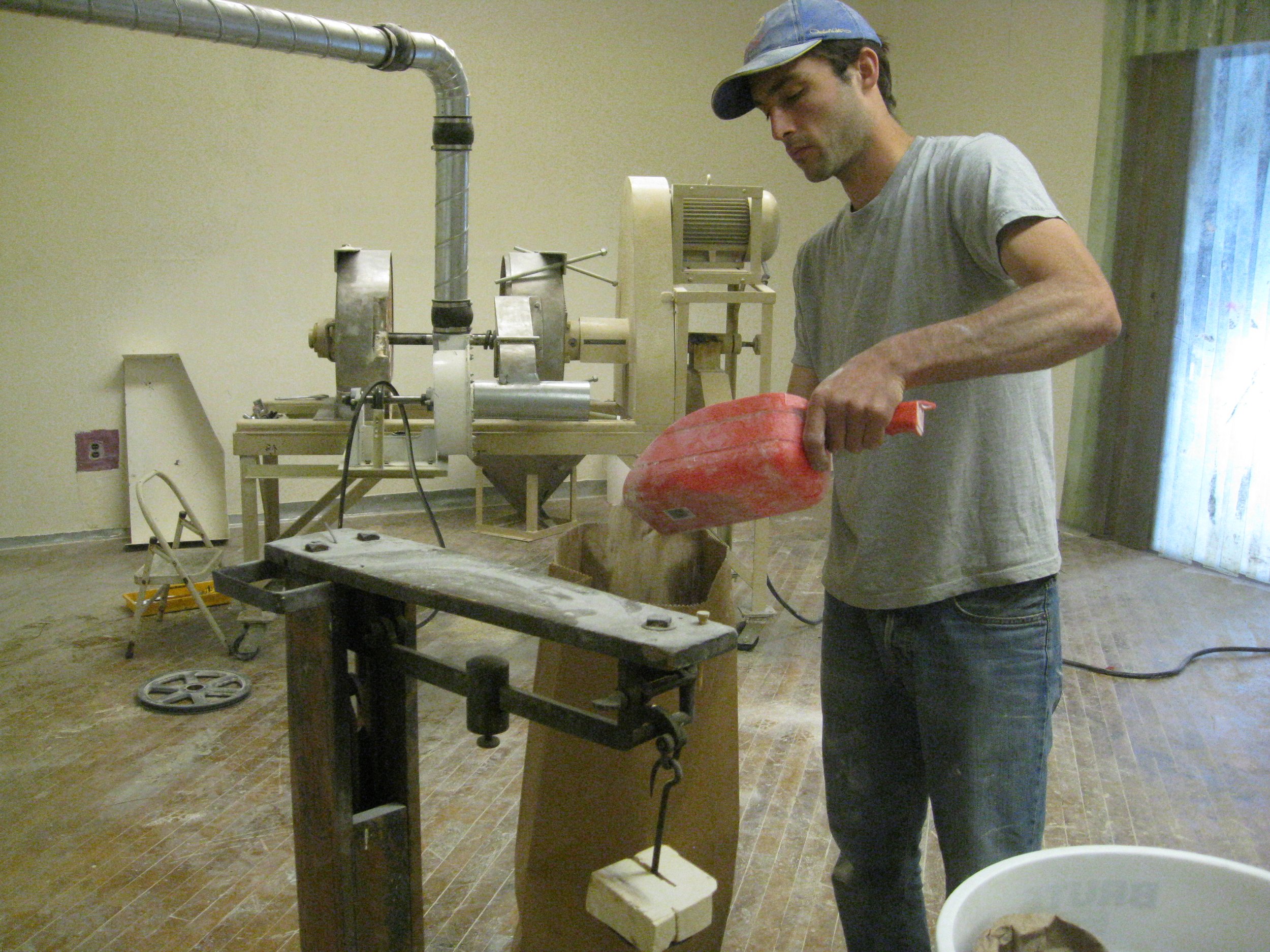
He filled hoppers with grain by hand, worked countless hours, and slept on pallets in the warehouse when he had to.
Photo by Rachel Lodder
-
![Two men outdoors wearing protective headgear and headphones, standing in front of greenery and a boat.]()
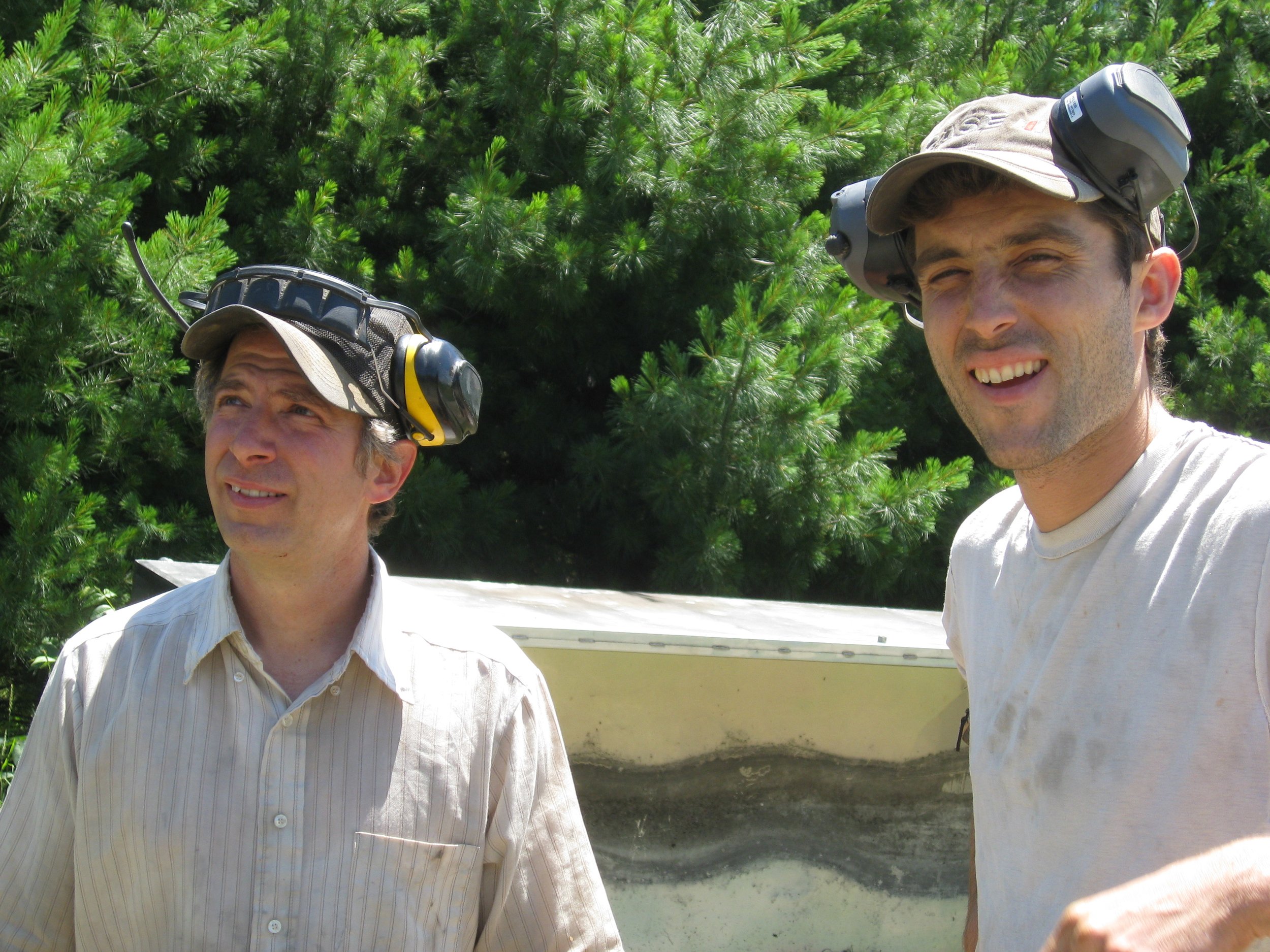
The early years were a time of experimentation and collaboration, and we were fortunate to receive guidance, support, and in some cases free equipment from many generous people who believed in what we were trying to do.
Photo by Rachel Lodder
-
![]()
Thor and Erick made a pilgrimage to see the late Jack Lazor, of Butterworks Farm, who literally wrote the book “The Organic Grain Grower”. He was a valuable mentor, and shared intimate knowledge. He understood that sustainable grain farming meant that you had to grow legumes and grasses rather than just growing food. He believed in the long game and sustainability.
-
![Two men standing on top of a grain storage bin, against a clear blue sky.]()
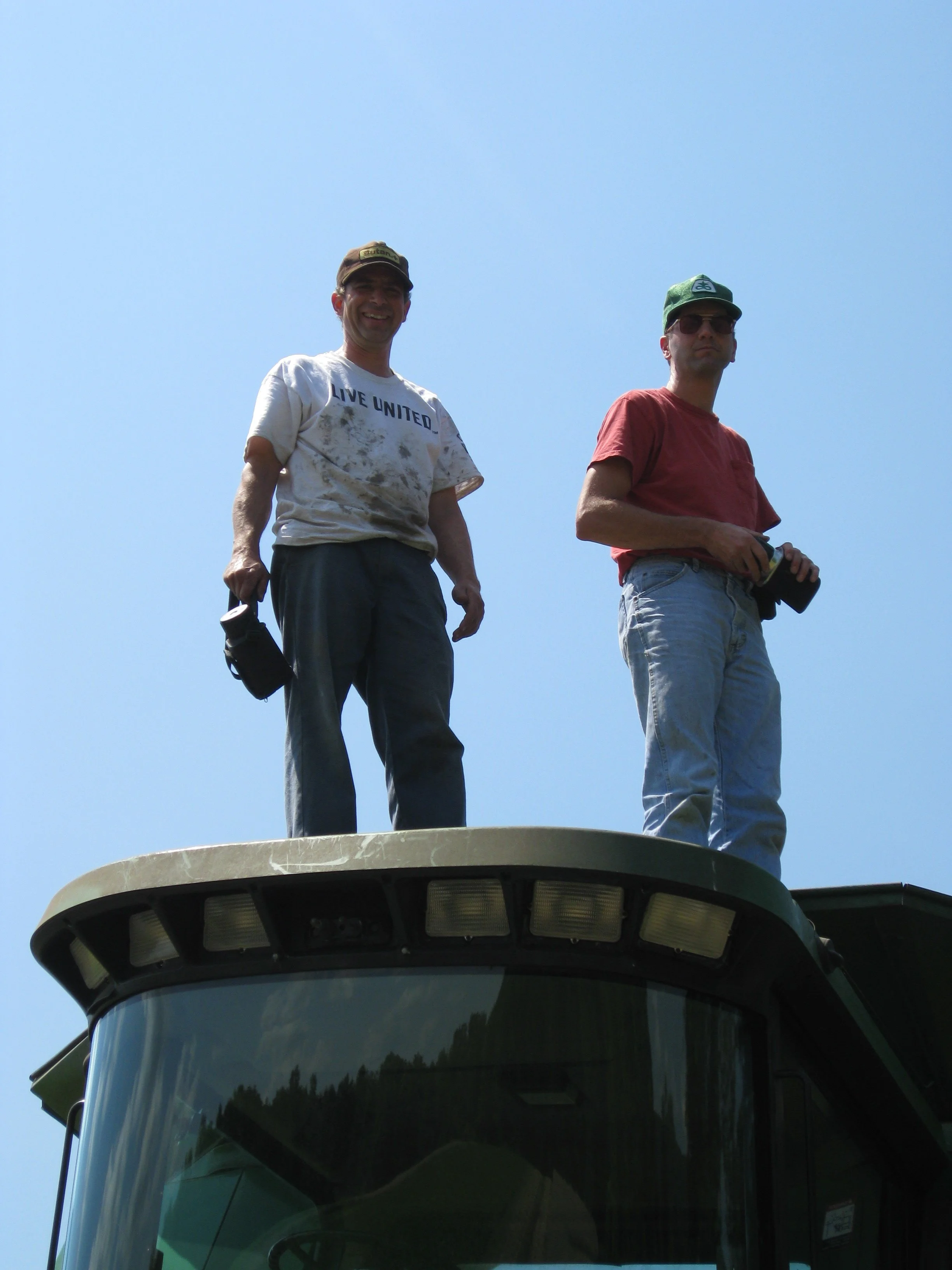
Locally, Tony Potenza and Danny Smith (pictured above with Thor) provided farming mentorship and equipment to Greg and Thor, who said “Danny was there for me on a daily basis. He grew wheat for FGF when we were starting out. Honestly, I'm not sure that without his direct help and deep knowledge of grain farming, that I would have made it as a farmer. He saved my ass time after time.”
Photo by Rachel Lodder
-
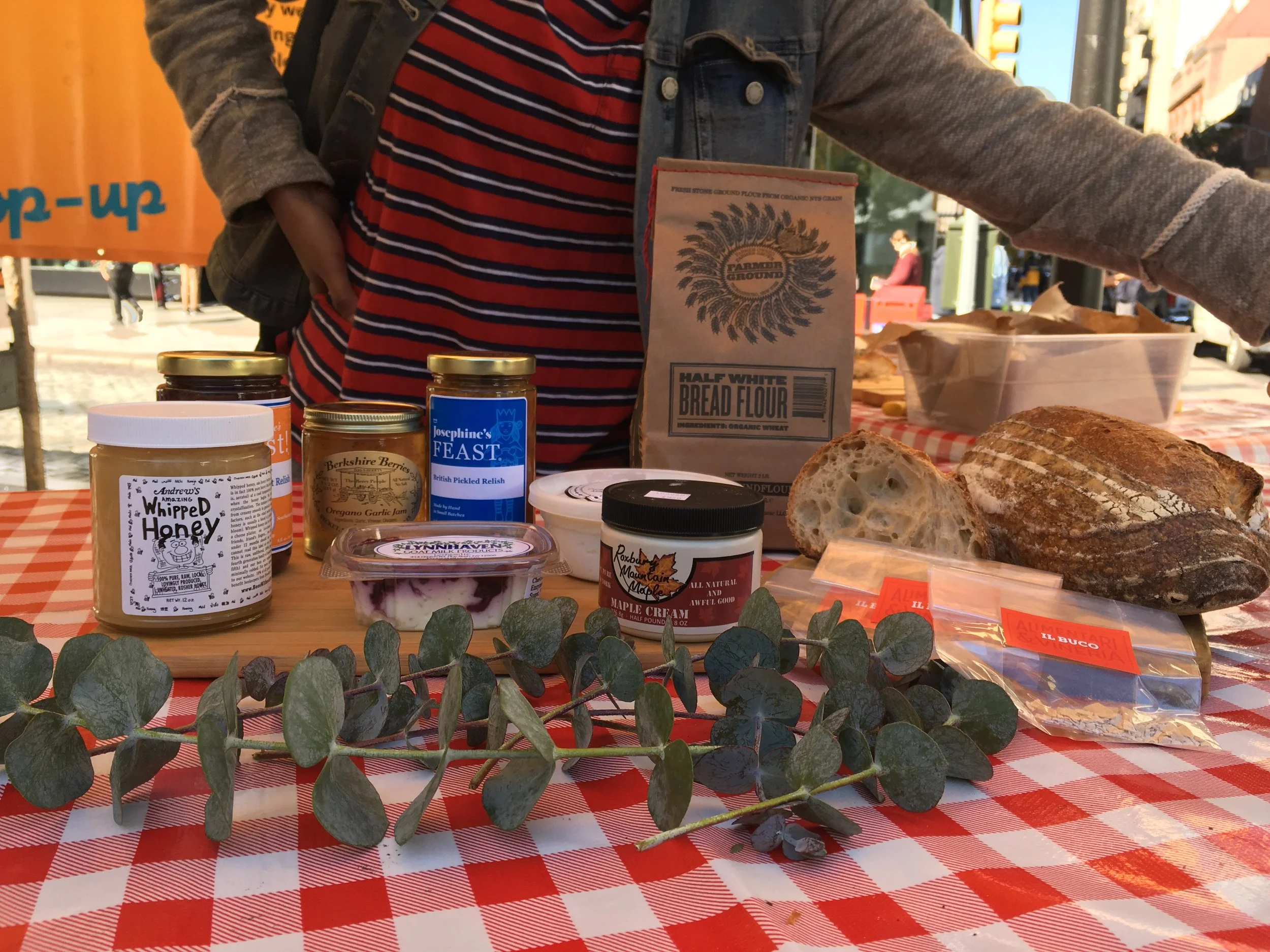
![Assorted baked goods and food products on a table with a red-and-white checkered tablecloth, including a loaf of bread, a jar of whipped honey, jars of jam or relish, a container of yogurt or dessert, and a bag of bread flour.]()
Monika Roth of Cornell Cooperative Extension assisted with grant writing, and Jon Bosak gave us our first loan for a flour mixer to make pancake mixes (since discontinued).
Photo by Heidi Dolnick
-
![A group of people sitting around a dining table during a meal in a cozy, well-lit room with wooden furniture and plants.]()
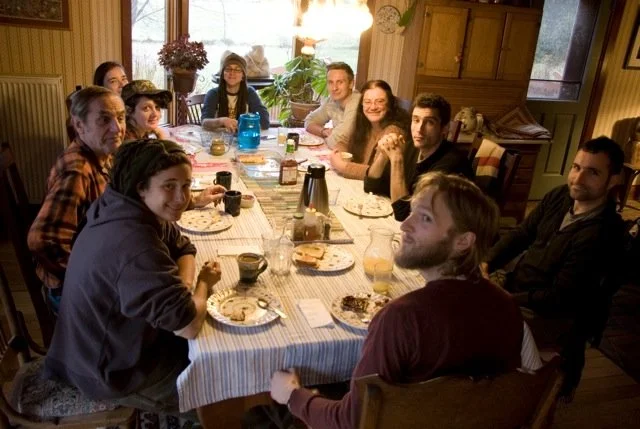
Erick's crew at Cayuga Pure Organics went down to the Greenmarket farmer's markets in New York City to sell flour, along with Erick's whole grains and edible beans.
Photo courtesy of Oechsner Farms
-
![Woman in sunglasses and blue shirt standing in a field of wheat, holding papers, with a clear blue sky and trees in the background.]()
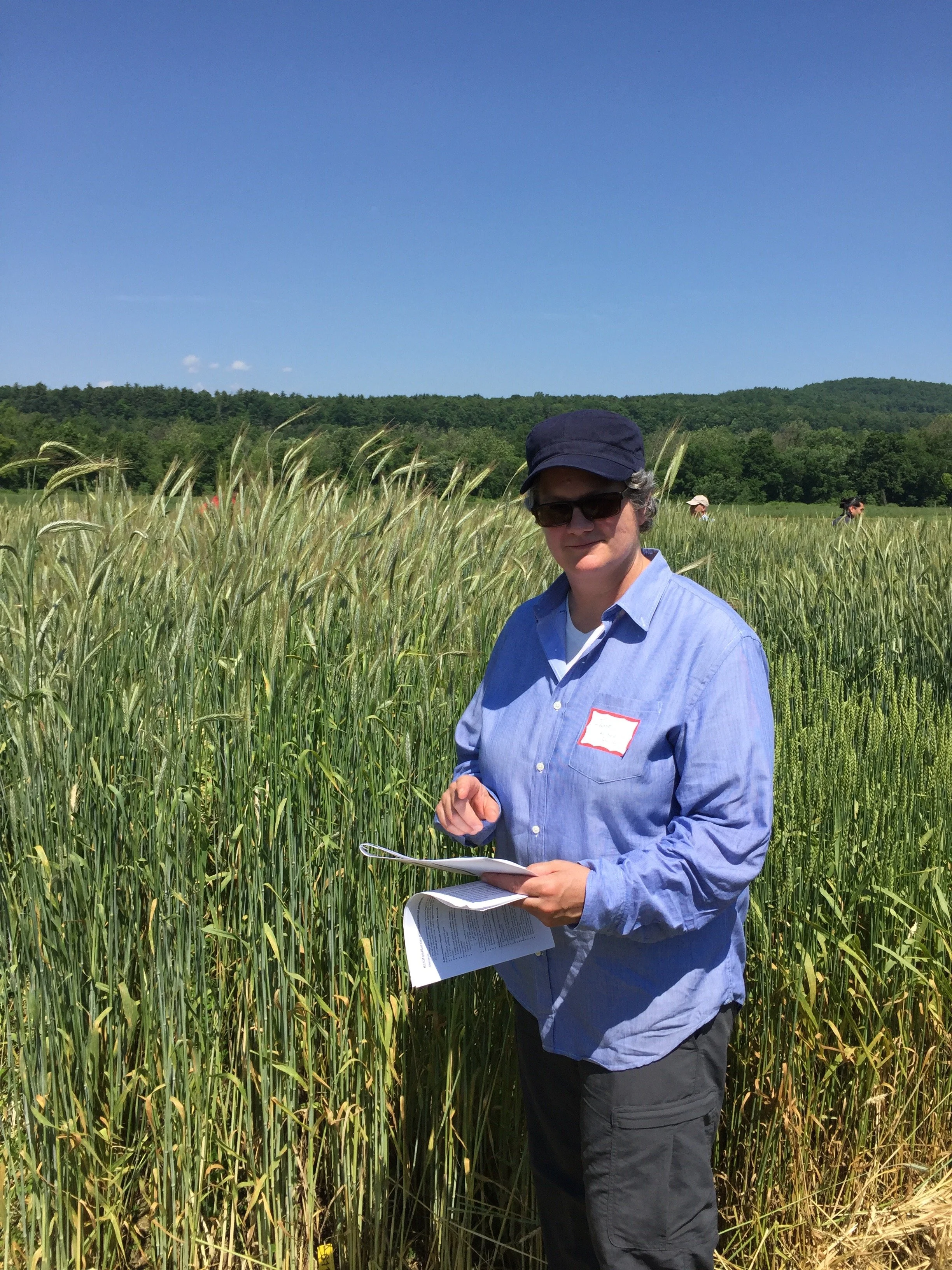
The NYC Greenmarket's local grains program (shout out June Russell!) gave us visibility and sponsored educational events to raise understanding of local grains.
Photo by Heidi Dolnick
-
![A man is speaking to an audience in a conference room with a mixture of adults seated and listening attentively, some taking notes. The room has artwork on the walls and a few people standing at the back.]()
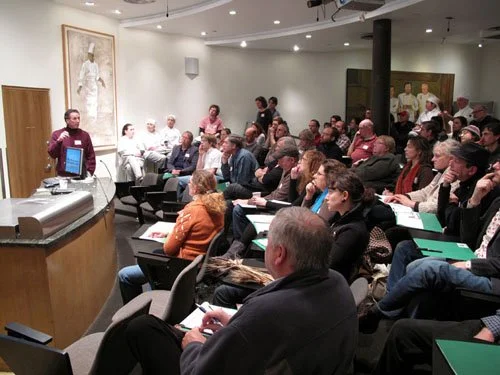
Thor and Greg collaborated with Greenmarket and NOFA NY’s wheat project, to run baking and farming trials across the state; all in the attempt to identify the most successful and flavorful varieties of winter wheat. This culminated in a blind taste test at the French Culinary Institute in NYC. The knowledge base was growing and bakers were interested in the results.
Photo courtesy of Oechsner Farms
-
![A woman in a kitchen holding a bag of flour, wearing a white apron.]()
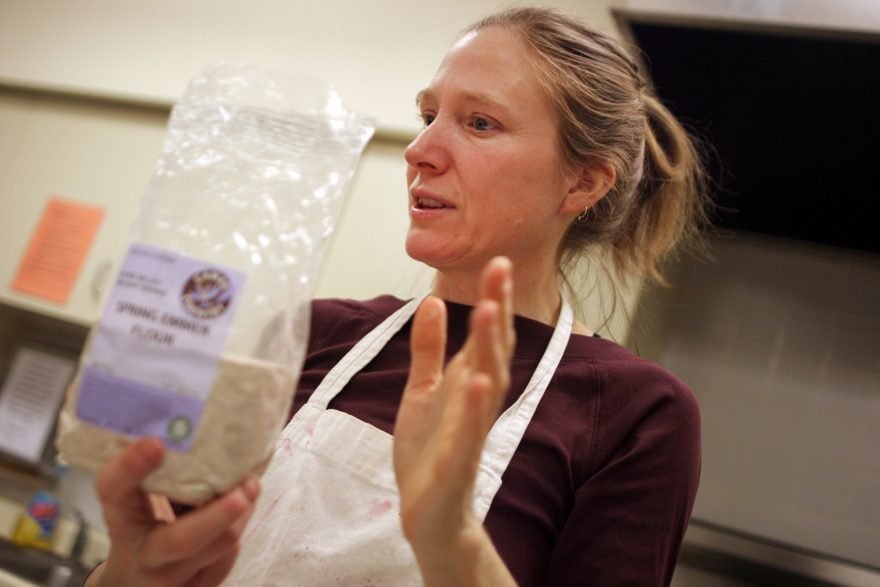
These early marketing and educational channels were vital in building connections with professional bakers, at a time when local grains were nearly unknown in the Northeast. As the movement grew, authors and educators such as Amy Halloran ( “The New Bread Basket” ) raised public awareness about the history of milling and local grains, and small mills continued to pop up across the country.
Photo courtesy of Amy Halloran
-
![Two men standing together in a bakery, smiling. One man is wearing an apron and glasses, the other is wearing a cap and checkered shirt. Behind them are bakery equipment, including a large stand mixer and another machine, with a bright window in the background.]()
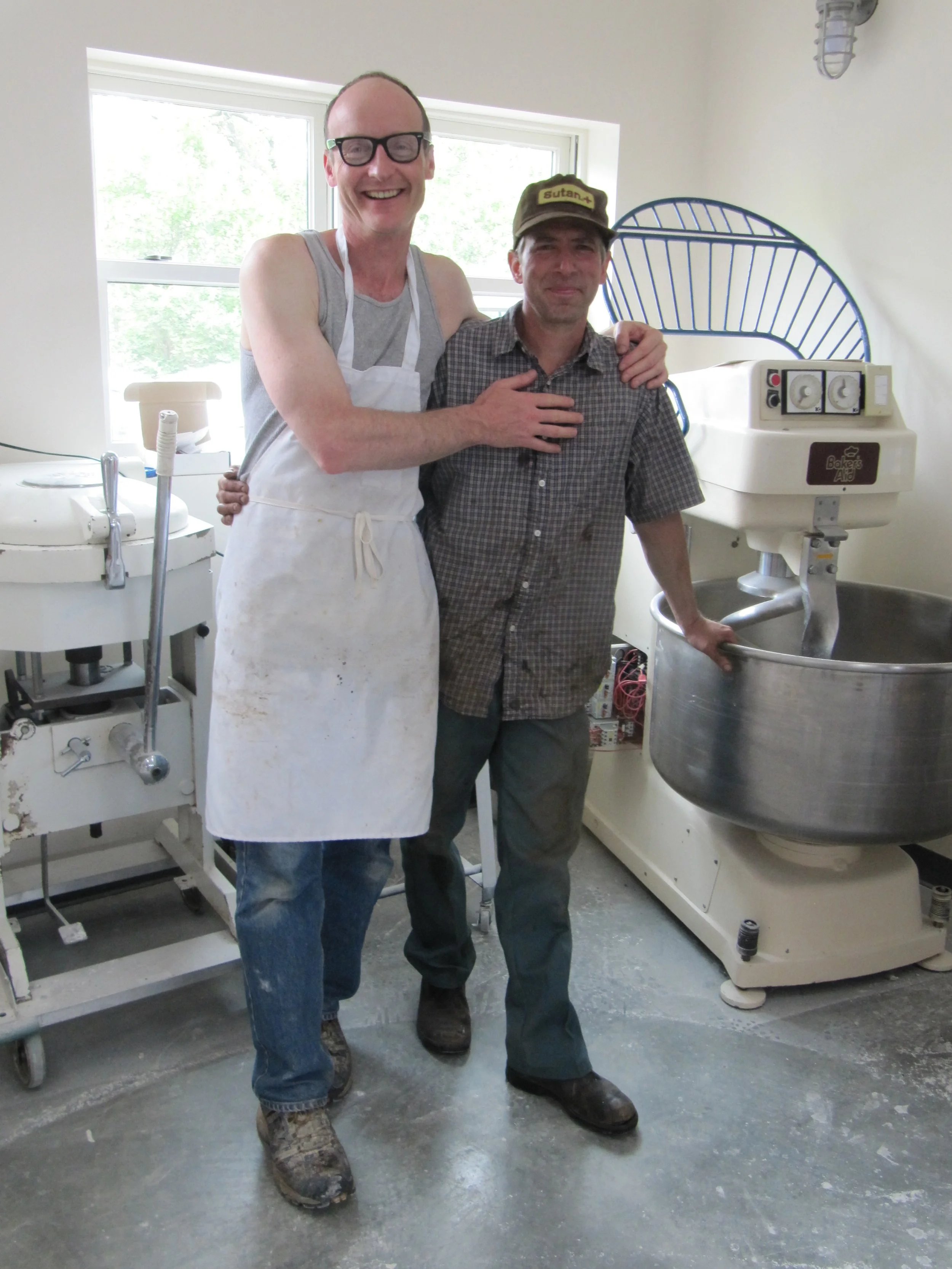
And with all of this momentum happening with their milling efforts, Thor had a serendipitous dinner with a dear friend of his, Stefan Senders. They were drinking wine and eating an unbelievable loaf of bread that Stefan had baked at home. Thor knew right then that a bakery made too much sense.
Photo by Rachel Lodder
-
![Construction of a large circular brick oven with a wooden framework seen inside a building under construction.]()
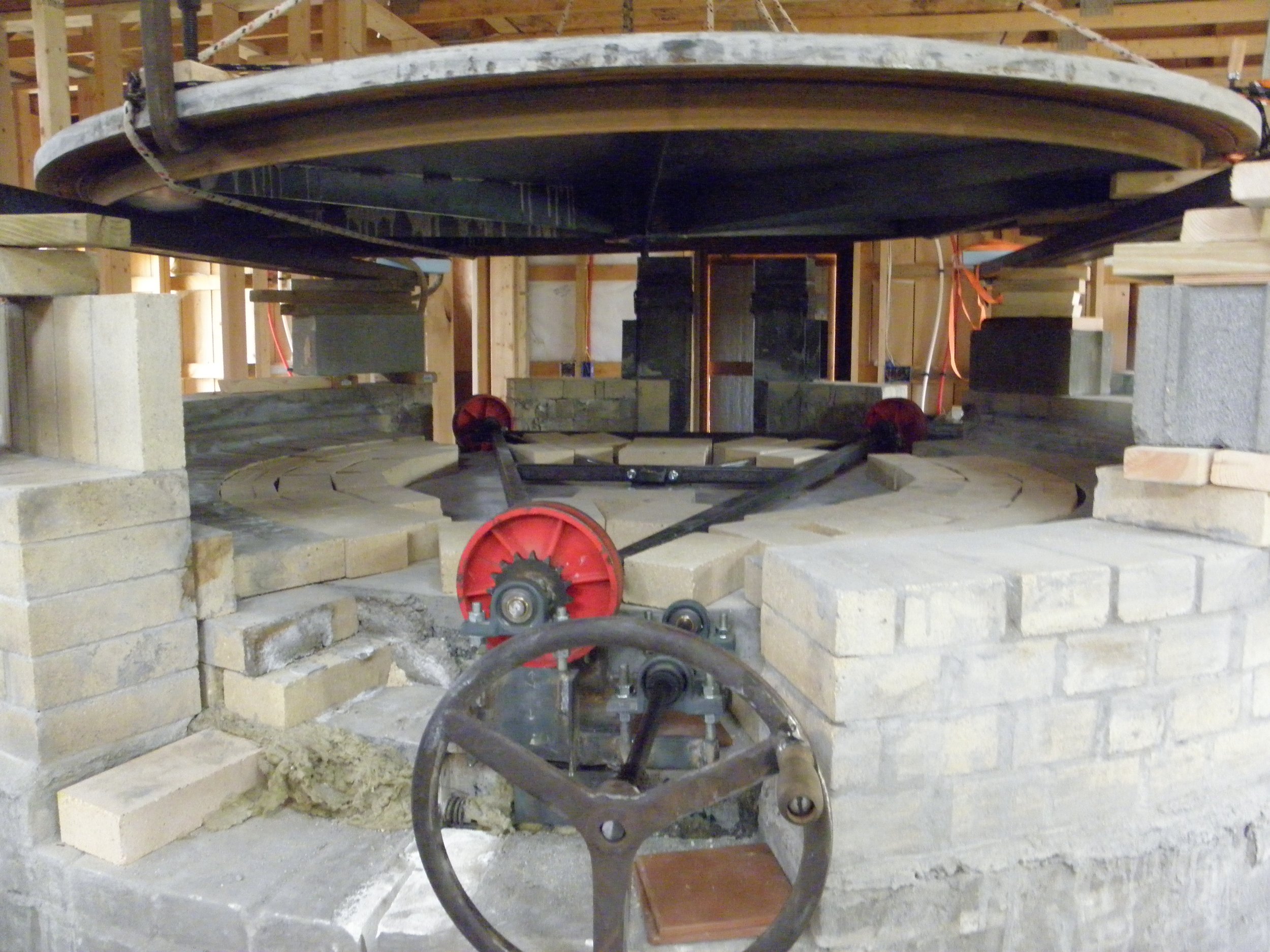
A brilliant plan was hatched to start a community supported bakery, with pledged investments from persuaded neighbors and friends. Stefan set forth to build an oven and bake the best bread with the flour from Thor’s new mill. The vision was clear; local bread made from local flour, milled from our local wheat. Real old-school community-building stuff.
Photo courtesy of Wide Awake Bakery
-
![Group of seven people posing together holding farming tools and bread, around a table with a basket of bread, in a cozy indoor setting.]()
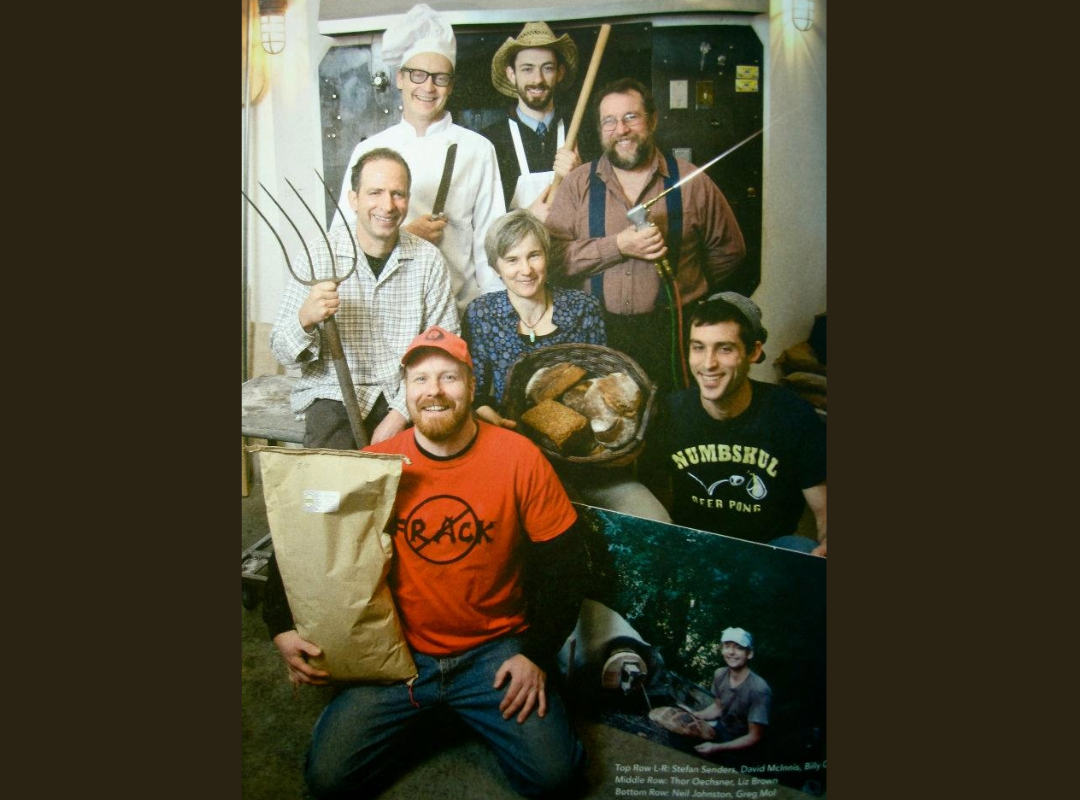
In 2010, Farmer Ground became a cooperative enterprise. Erick had transitioned out of the business, and his share was purchased by a professional electrician named Neal Johnston, who had recently relocated from Oregon.
Photo by Robyn Wishna
-
![Two men on a construction site with wooden framing in a rural area under a partly cloudy sky.]()
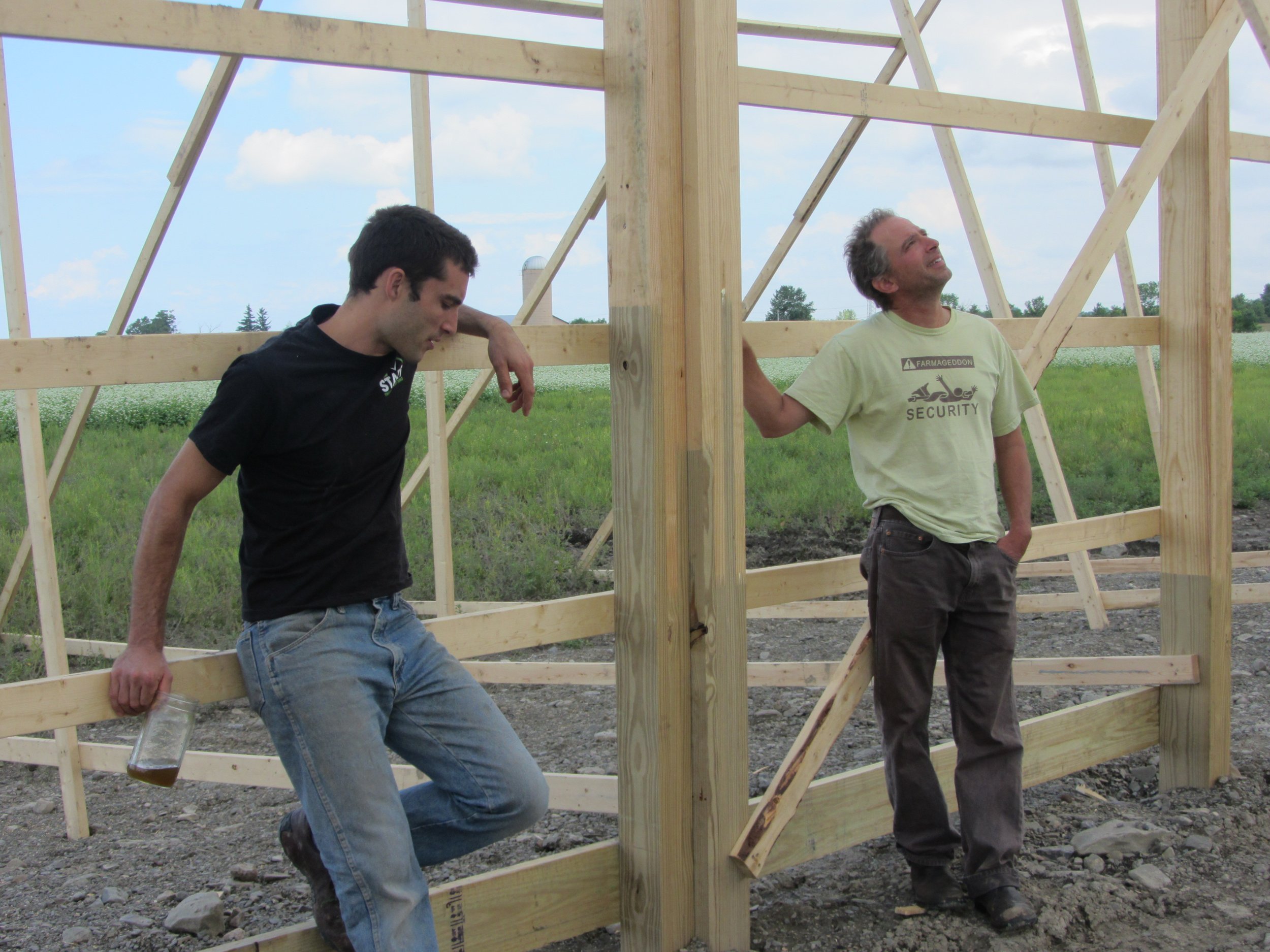
Neal's timing was fortuitous as big plans were shaping up…
Photo by Rachel Lodder
-
![Two people standing inside a wooden framing of a building under construction, with a cloudy sky and green fields in the background.]()
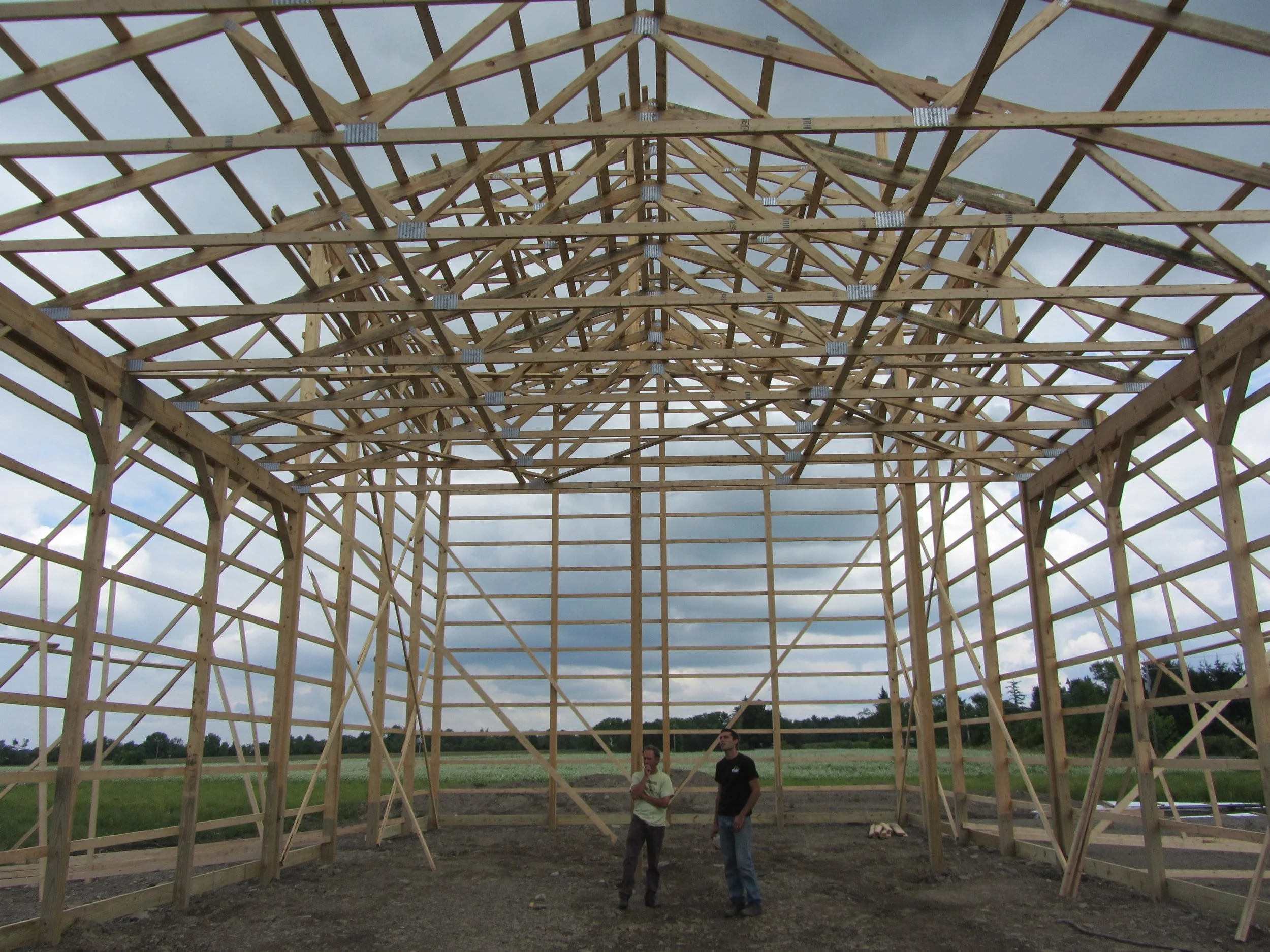
The plan was put into motion to build our new custom facility in stages.
Photo by Rachel Lodder
-
![A large metal sided building with multiple windows and a door, situated on a dirt ground under a clear blue sky, with a red flatbed truck parked in front of it.]()
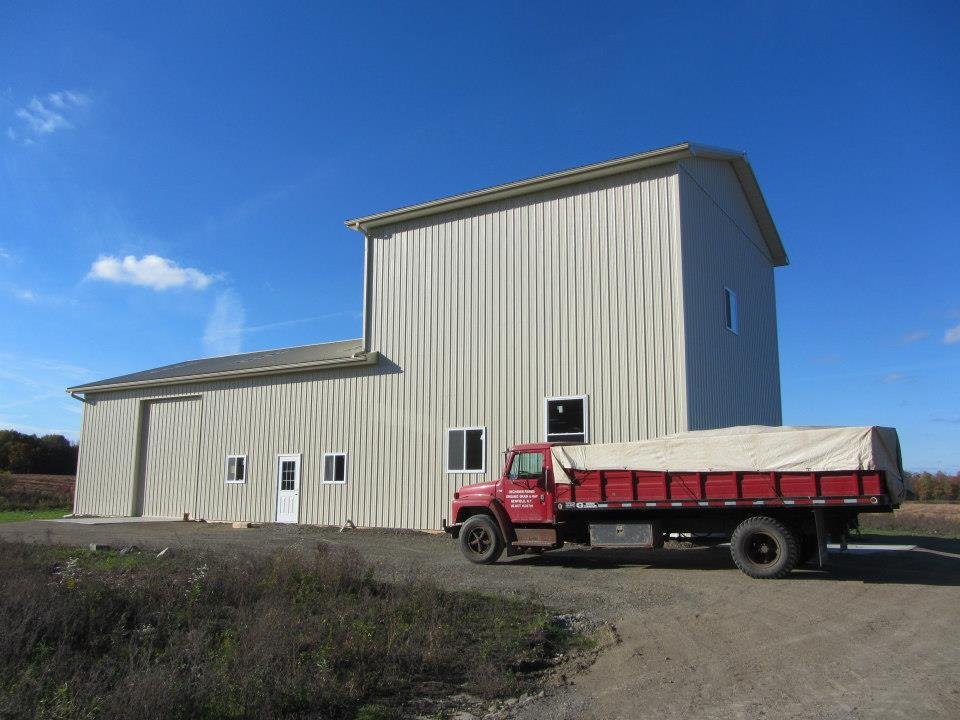
We would increase productivity to match our growing markets, and give ourselves room to expand. All while spreading the word about local flour and becoming better millers at scale.
Photo by Rachel Lodder
-
![A man in brown overalls stands on a wooden beam inside a building under construction, smiling and looking at the camera.]()
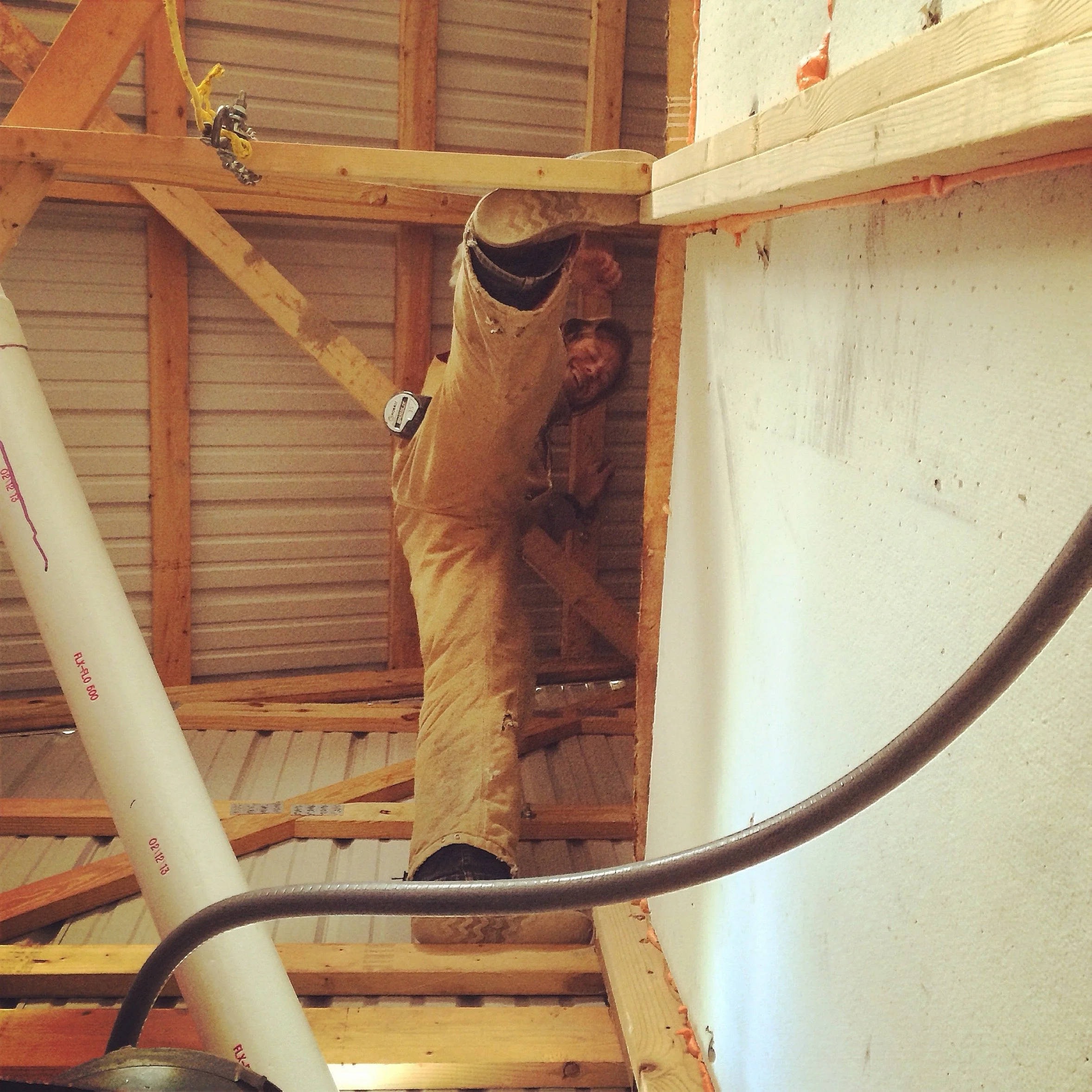
Neal's industrial expertise was invaluable, along with his ability to design modern automation and industrial controls. Importantly, he was willing to try anything and everything in the pursuit of learning.
Photo by Michelle Russo
-
![Person using a pneumatic chisel to sharpen a millstone that is laying on some robust saw horses or a custom bench.]()
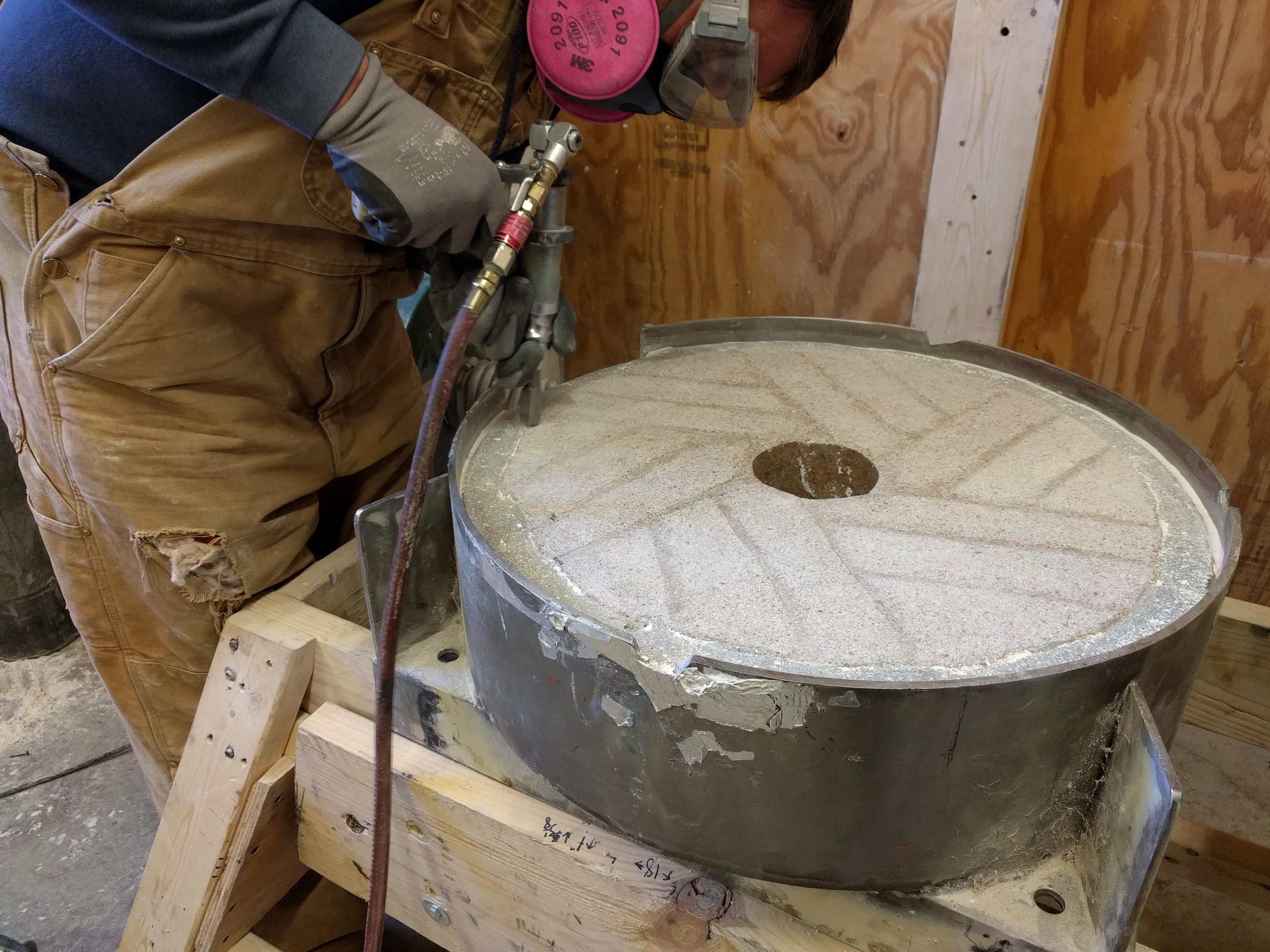
The DIY ethic went as far as building our own falling number tester, as well as developing our own methods and tools for sharpening millstones…
Photo by Daniel Kidney
-
![A worker is standing on top of a grain silo under construction, while a large crane lifts a cross auger pipe towards him, on its way to being mounted on top of the grain bins.]()
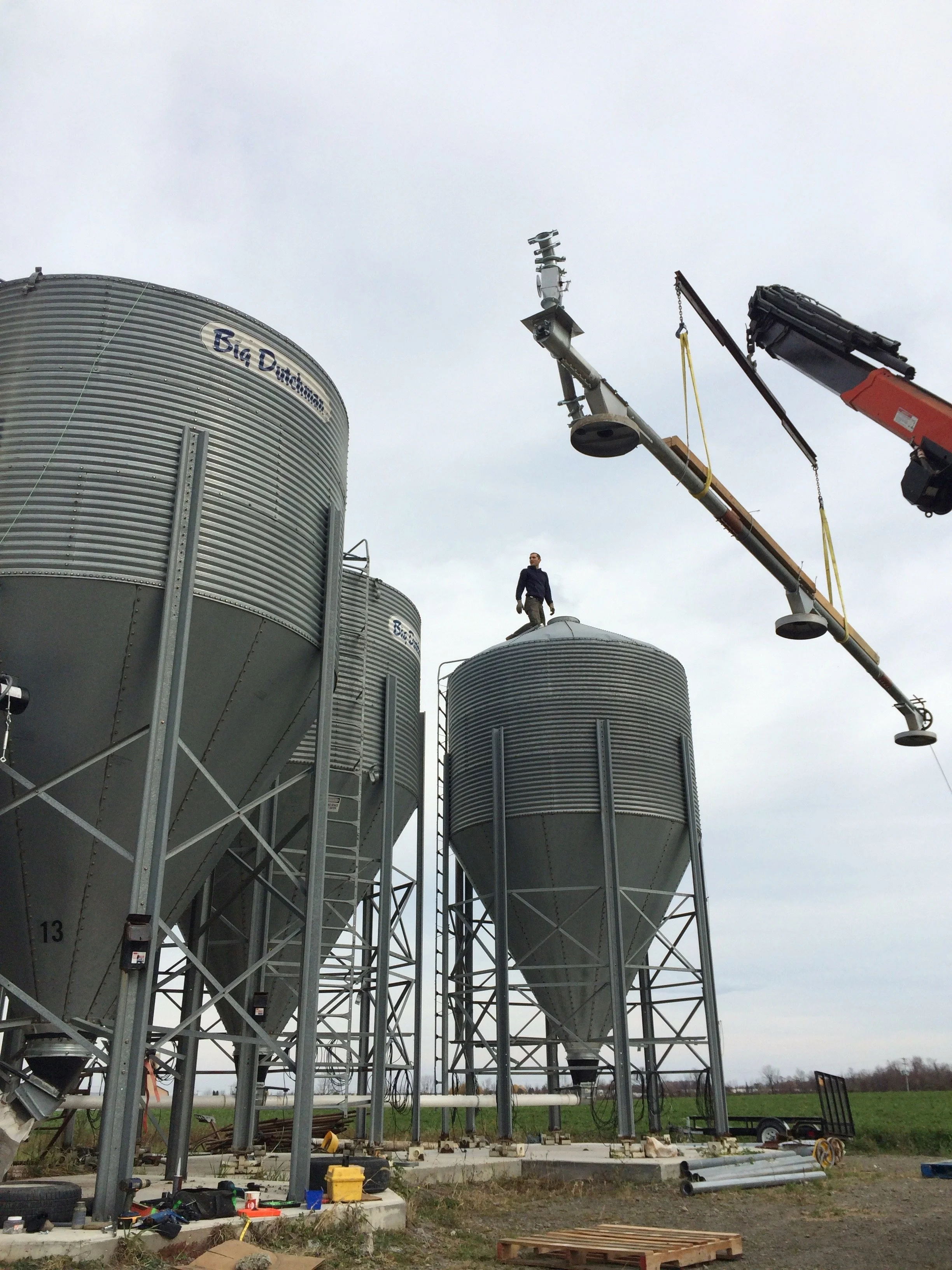
…and building and installing our grain handling and storage system from scratch.
Photo by Michelle Russo
-
![A man in a plaid shirt and khaki pants standing in a wheat field under a blue sky with scattered clouds, near agricultural machinery.]()
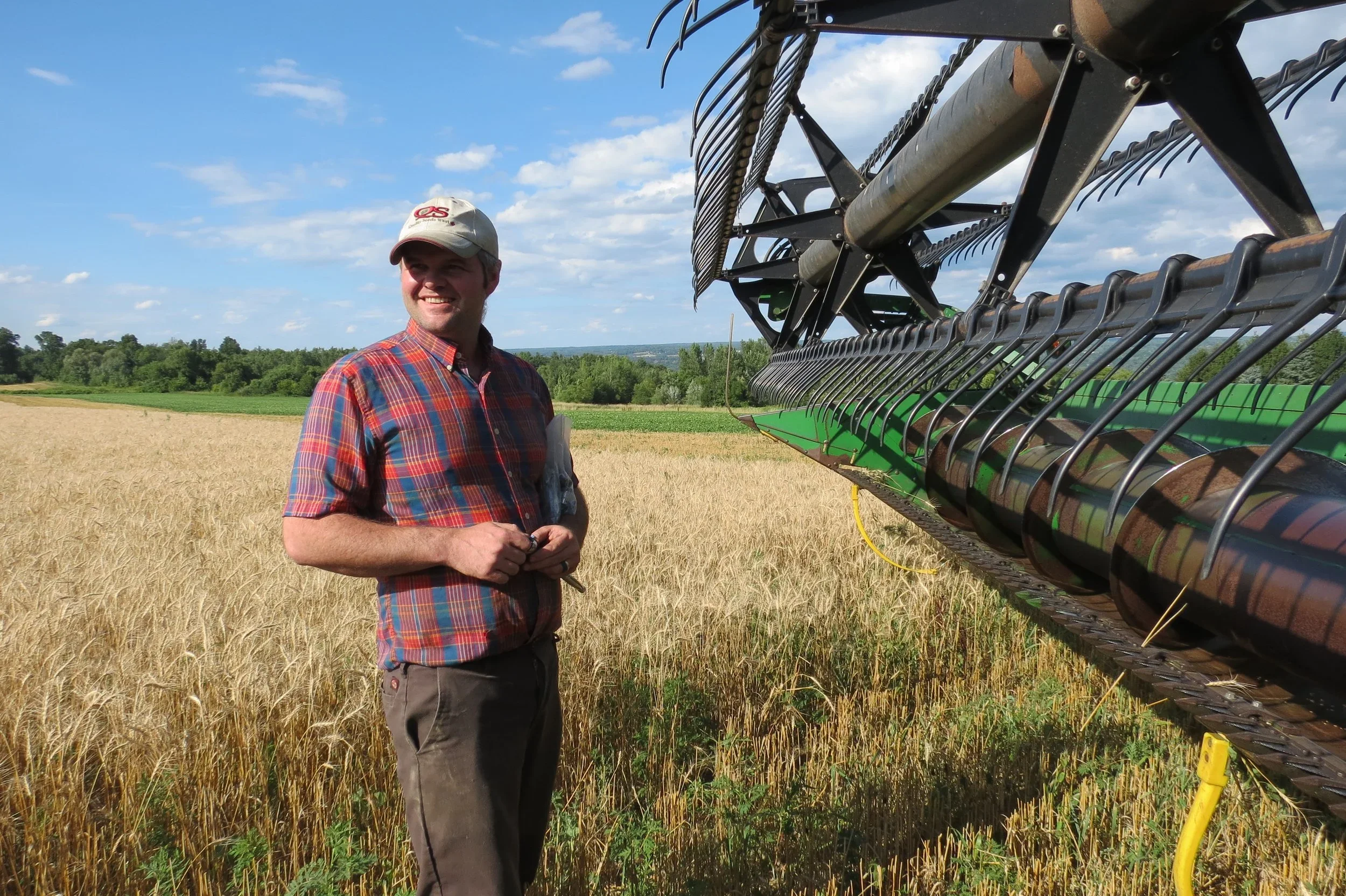
Dan Gladstone began working at Oeschner Farm in 2010. As he gained experience, his farming knowledge swiftly surpassed our own. He’s taken on the responsibilities of field work management and planning, and we’re lucky to call him a partner and friend. The future of the farm is in his hands and heart, and we couldn’t be more excited about that.
Photo by Rachel Lodder
-
![Group of five people, three men and two women, standing in front of a large blue tractor outdoors on a farm with trees in the background.]()
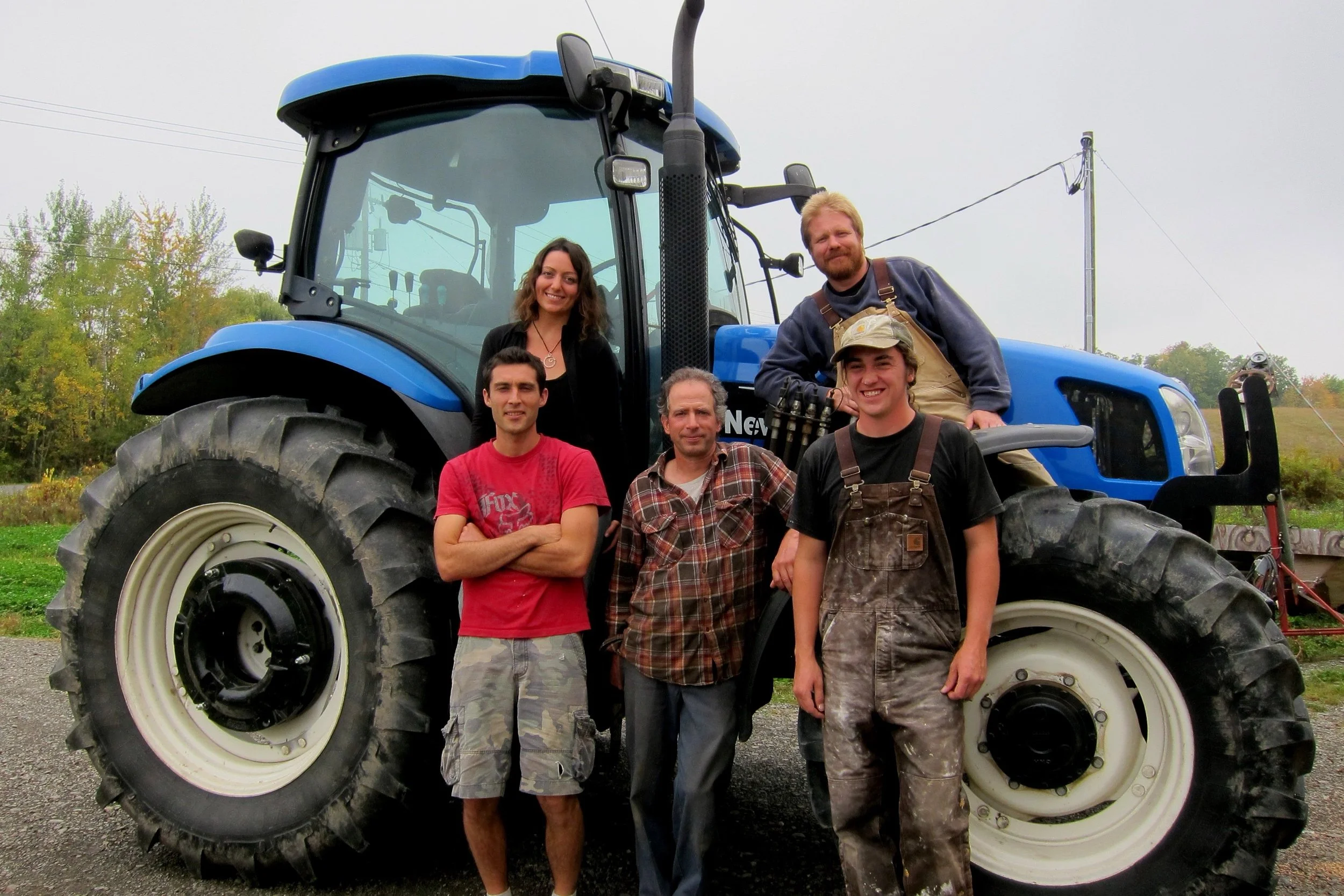
By 2012, Benji Knorr (front row right) jumped on board as an essential teammate in day-to-day milling operations and infrastructural improvement.
-
![A woman with glasses on her head smiling while working in a workshop. She is standing next to a blue container with utensils and a box of some material. The workshop has wooden walls and a window allowing natural light in.]()
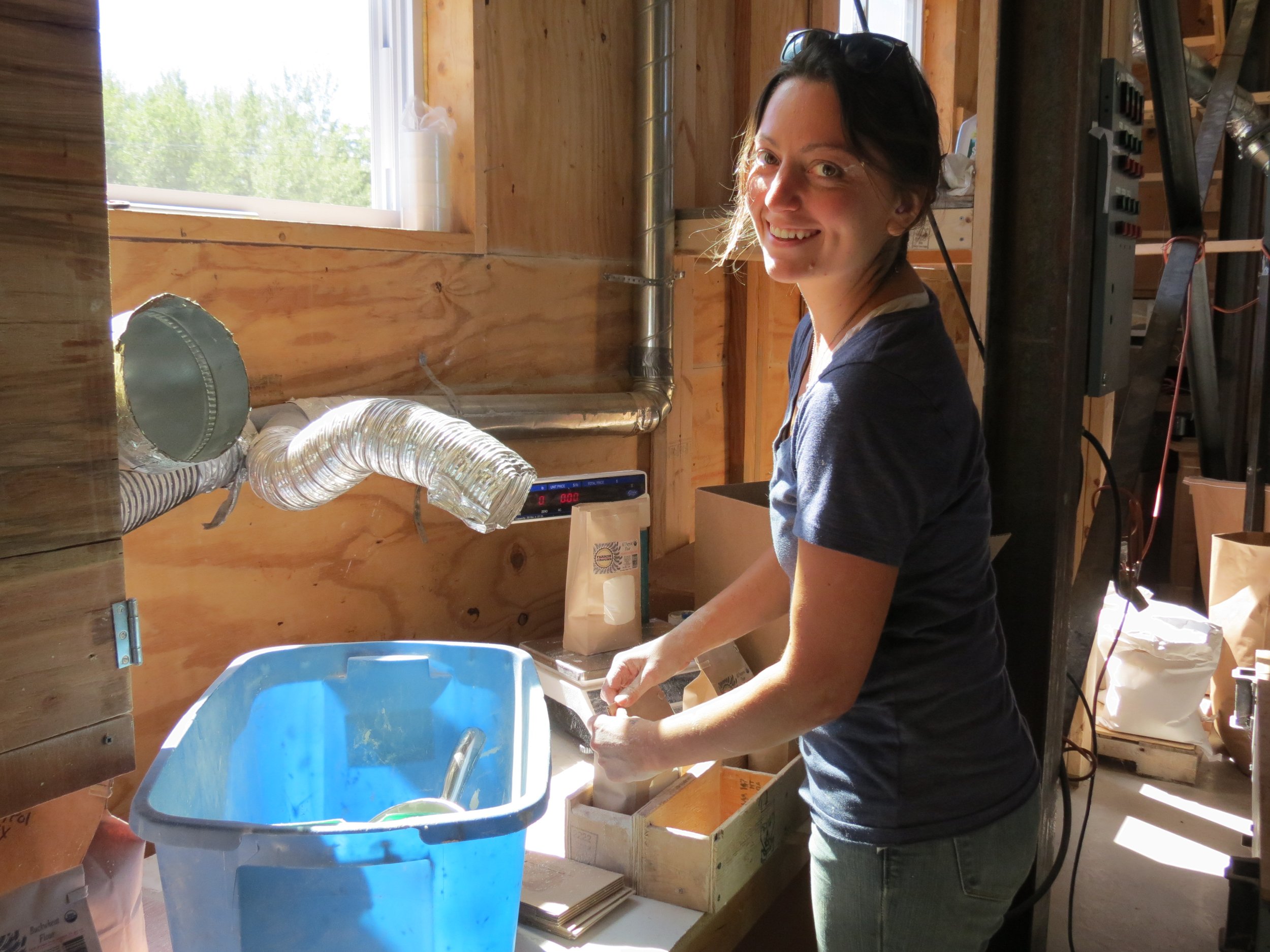
Michelle Russo (above) gave us so much support in the early days of the mill; providing labor and helping shape our identity.
Photo by Rachel Lodder
-
![A group of nine people and a white horse in a snowy field, with some small trees and a cloudy sky in the background.]()
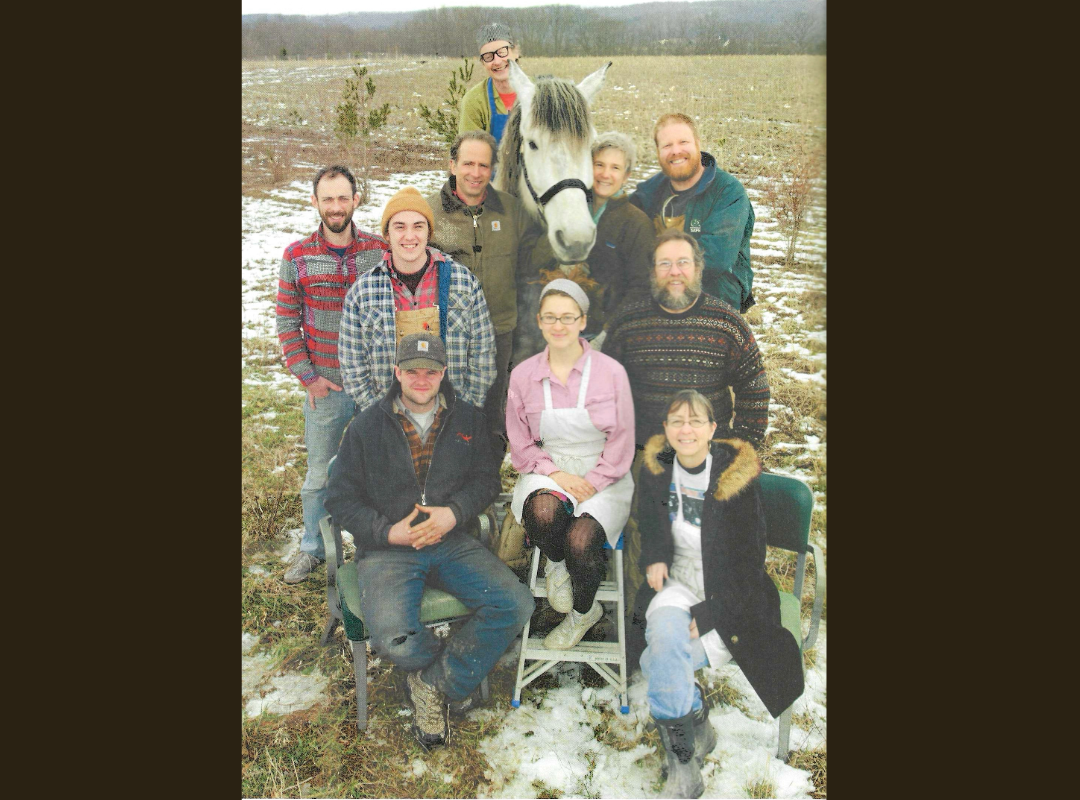
Every year that we honed our craft, brought new faces and new ideas. Our community was blossoming.
Photo courtesy of Edible Finger Lakes
-
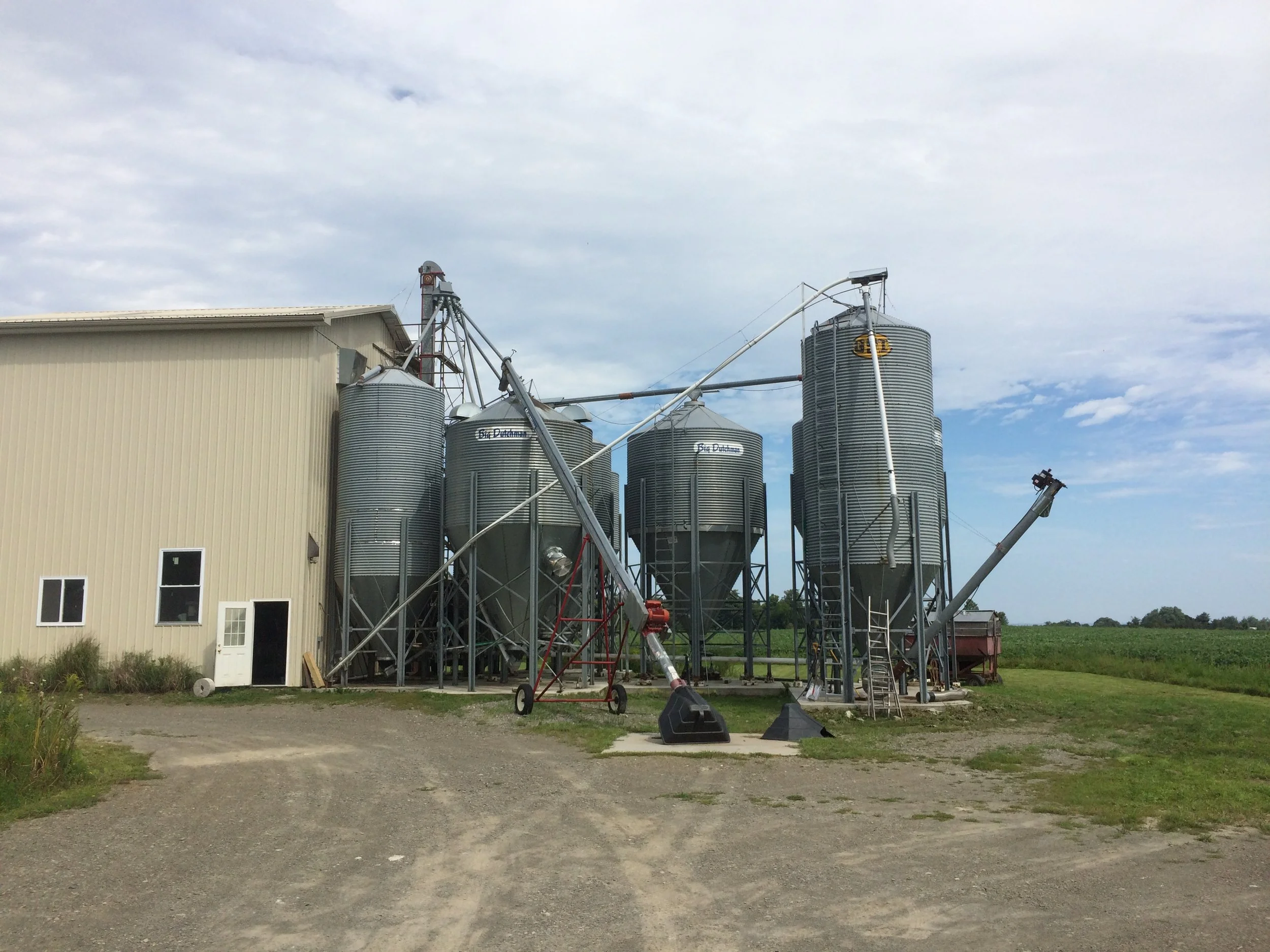
![Four large metal grain silos attached to a beige farm building, with conveyor equipment and farm machinery outside, set on a grassy and gravel area under a cloudy sky.]()
The long process of experimentation led to many discoveries that ran contrary to the beliefs of the industry at the time.
-
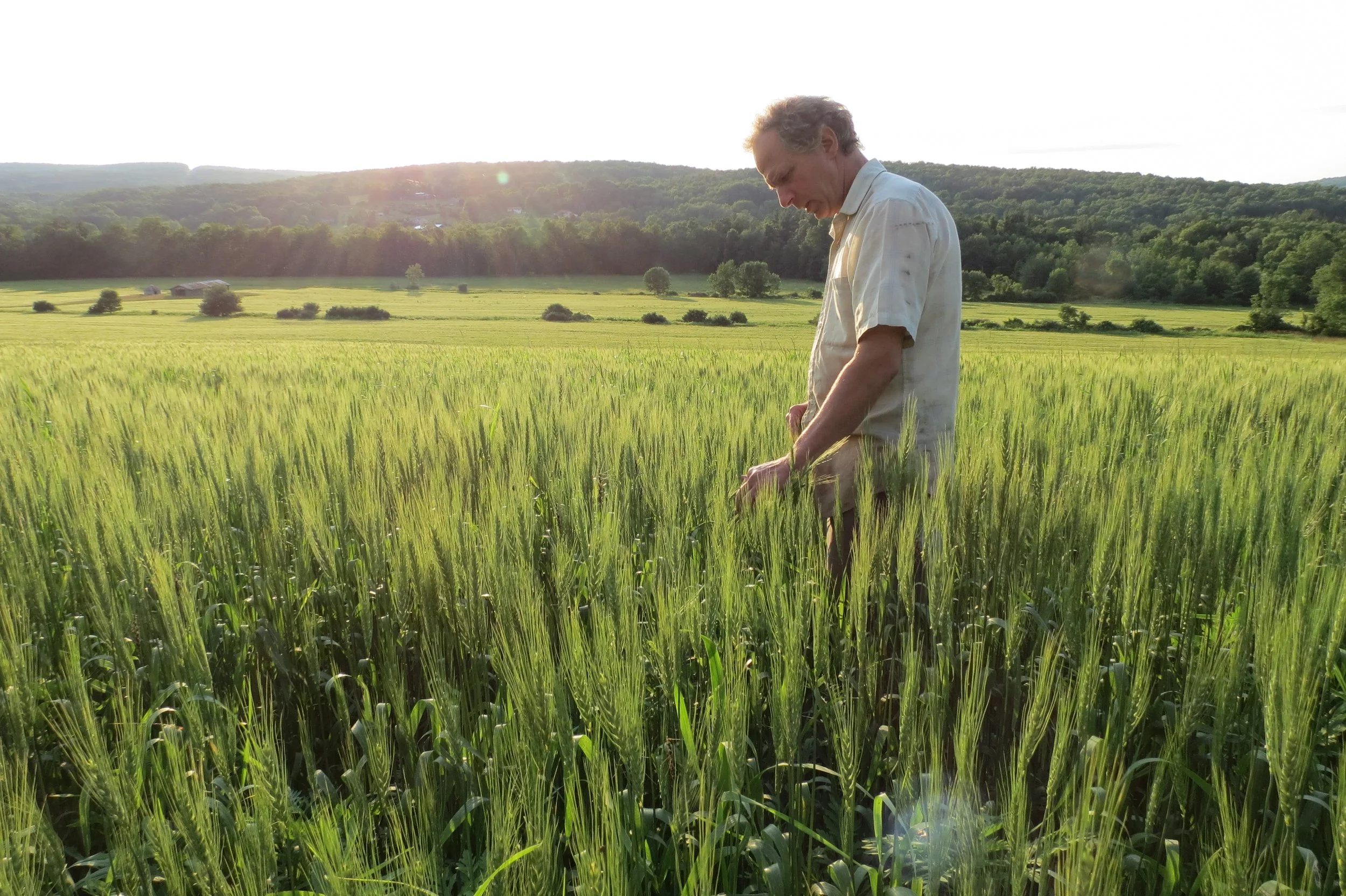
![A man in a white shirt walking through a lush green wheat field at sunset.]()
Central New York grows high-quality bread wheat on par with the best in the country.
Photo by Rachel Lodder
-
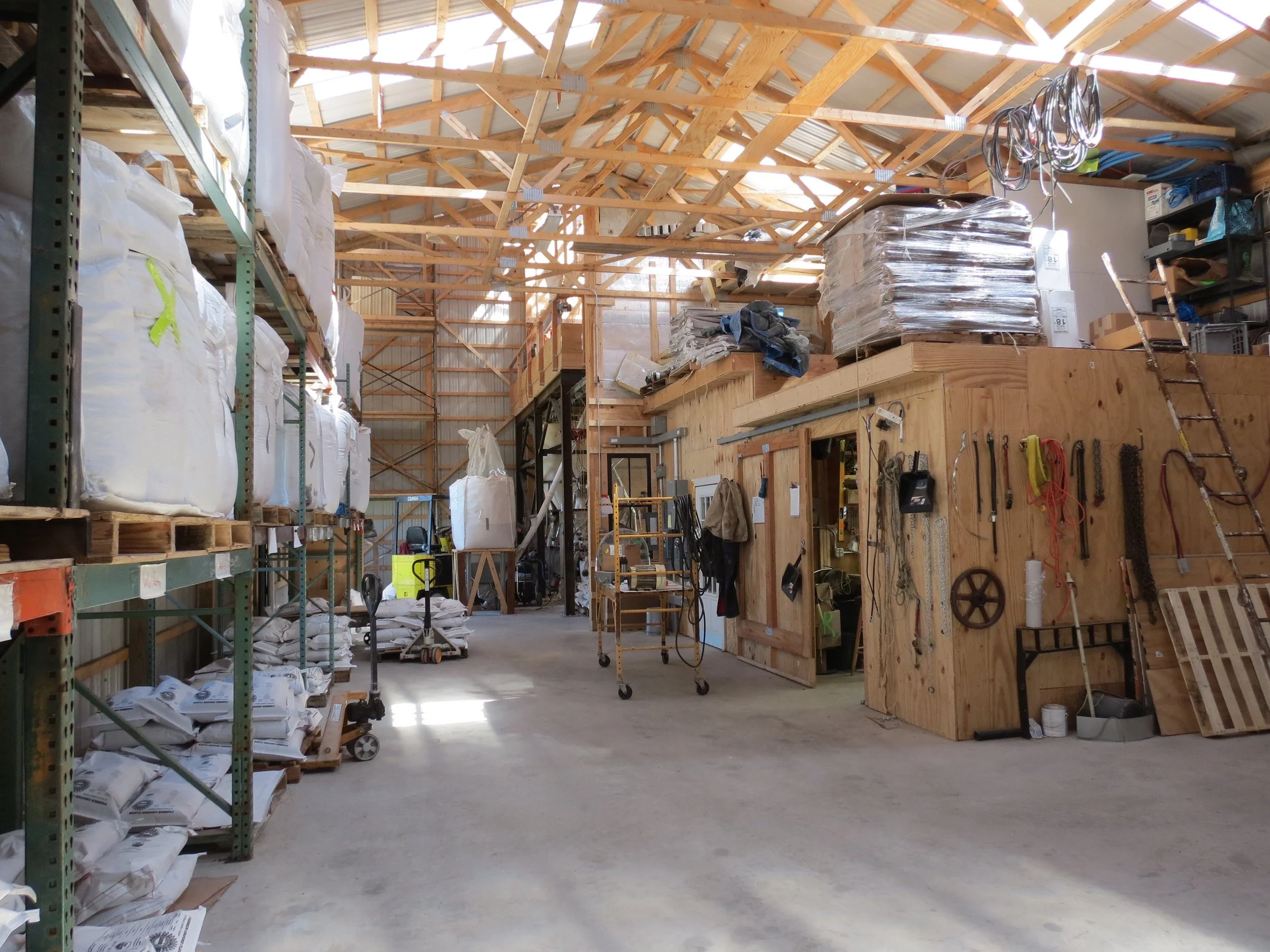
![Interior of a warehouse or workshop with wooden structure, shelves stocked with bags and packaging materials, tools hanging on a wooden wall, a ladder, and equipment stored on shelves.]()
Whole grain flours have a very reasonable shelf life when handled appropriately, and the weather variability in the Northeast is entirely manageable with respect to wheat quality.
-
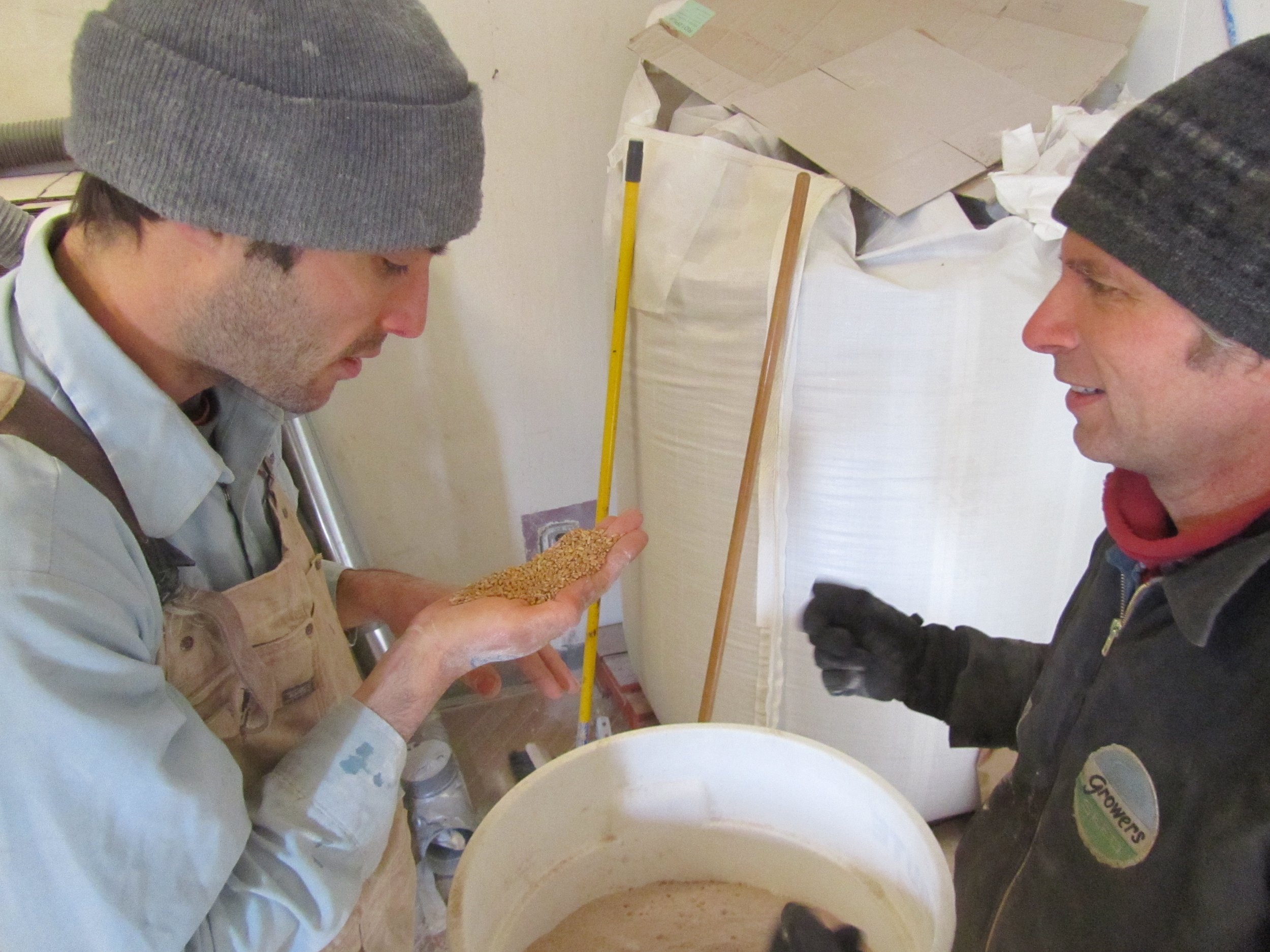
![Two men wearing beanies and work clothes inspecting a grain or seed sample in a workshop or storage area.]()
In fact, the process of adapting to and learning from the conditions in the Northeast have given us a deep understanding of the minutiae of wheat quality and the best practices for blending and managing a milling wheat supply.
Photo by Rachel Lodder
-
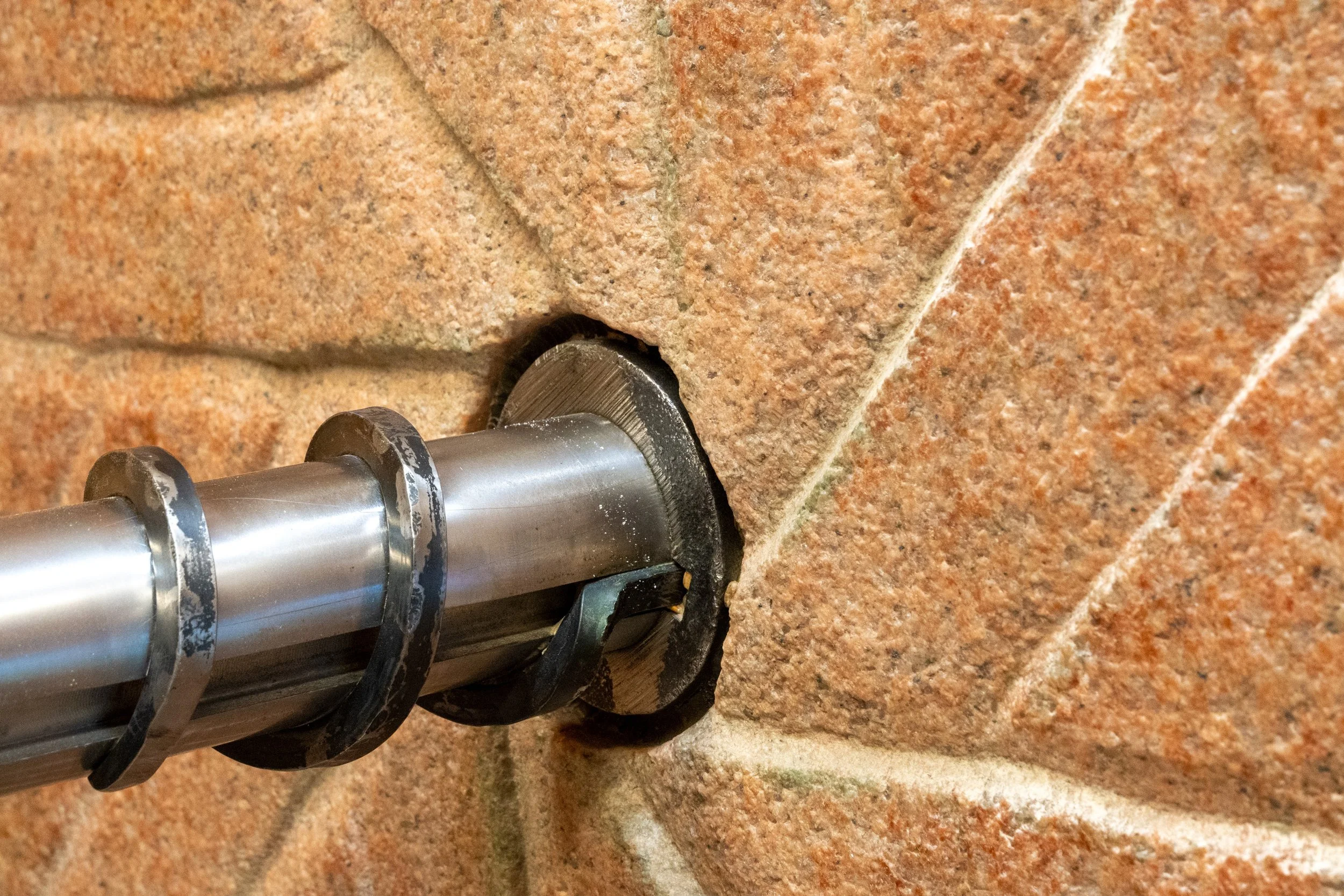
![Close-up view a mill stone made from pink granite. Clearly shown are the furrows that have been chiseled into the stone for grain movement. Going into the middle of the millstone is a steel shaft.]()
Much like the natural variability in a millstone, our local climate and soil gives a breadth of quality to our grain supply
Photo by Ray Helmke
-
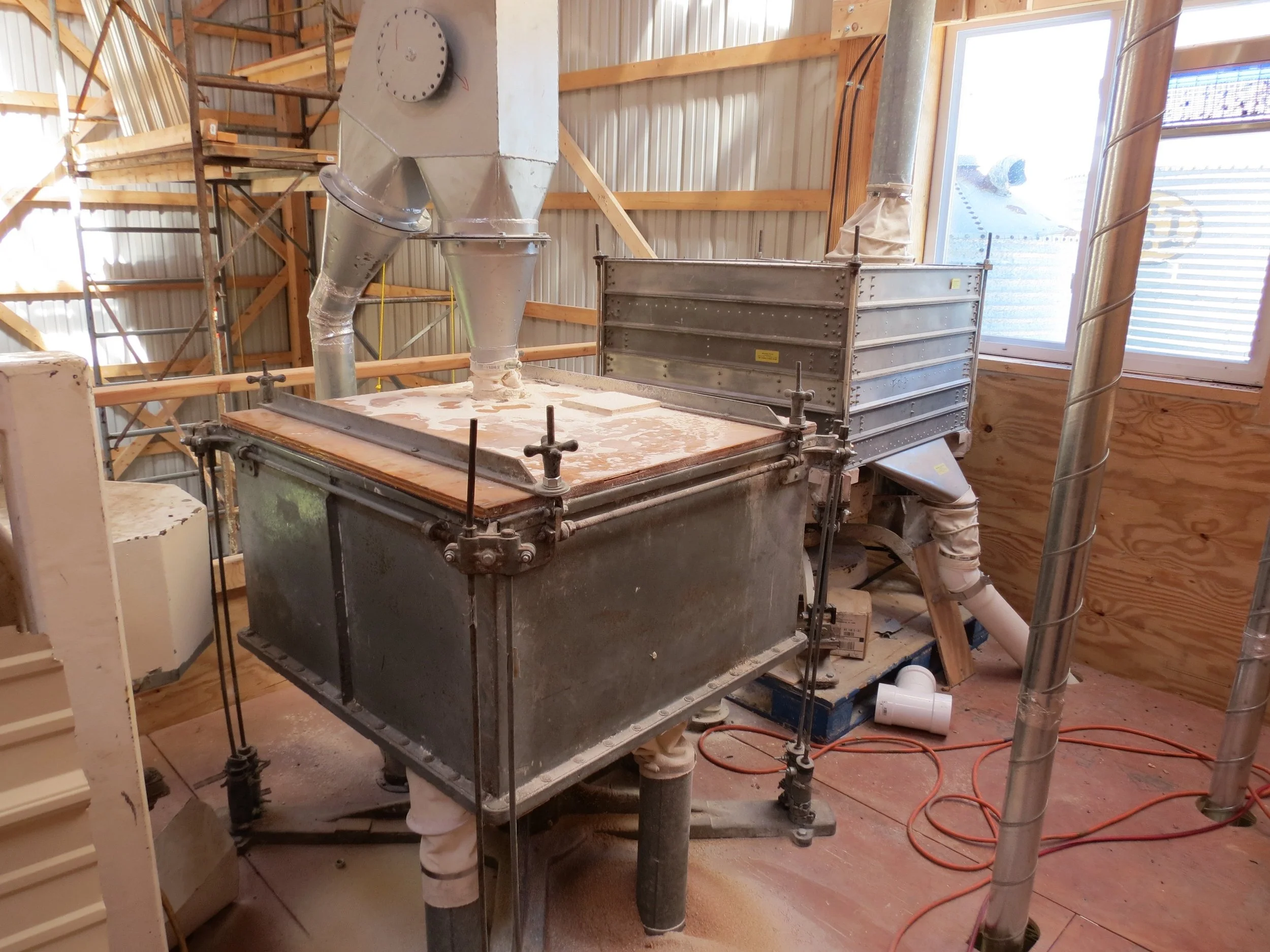
![Industrial flour sifter in a sunny room with lots of pipes around it and running to it.]()
This dovetails with the tastes of modern artisan bakers, who value nuance and depth of flavor.
Photo by Michelle Russo
-
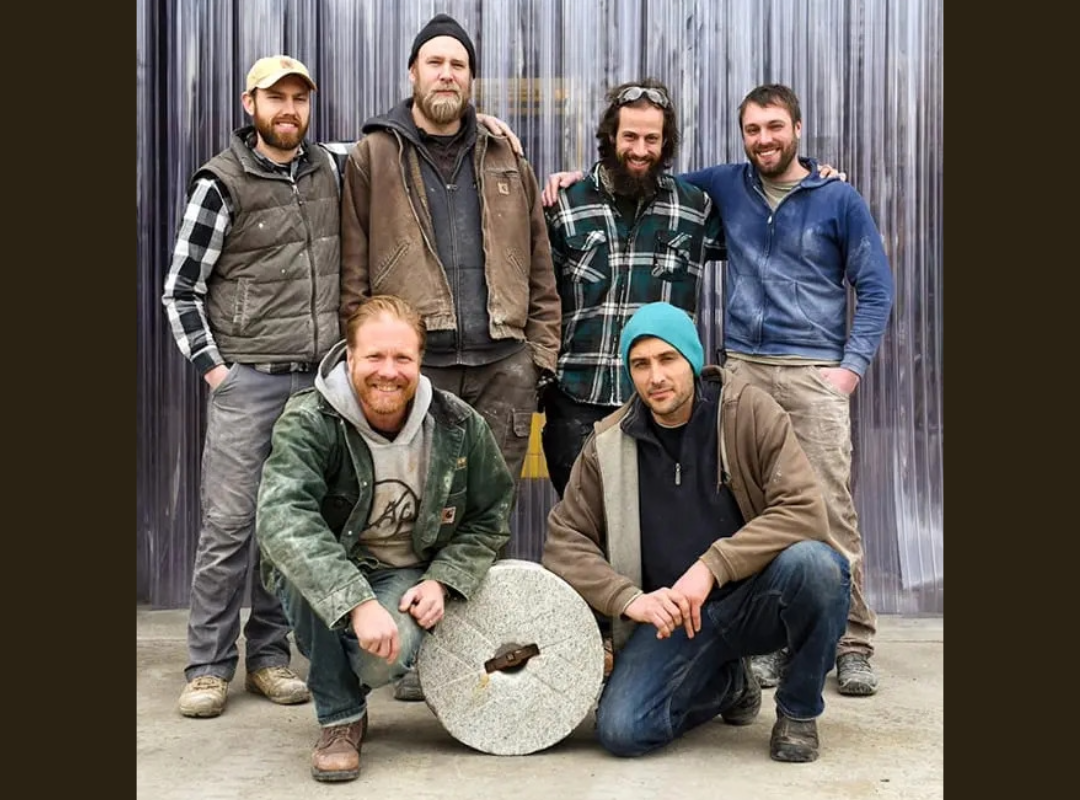
![Six men posing outdoors in front of metallic background, two are kneeling, the others standing, some with arms around each other, casual clothing, some wearing jackets and beanies, one with an old millstone staged in front of them on the ground.]()
In 2014, Ben King, a true godsend (back row, second from left), joined the team, and we built the “West Wing” and cleaning deck additions. The team and the operation continued to grow and add valued employees.
Photo by Sara Tro
-
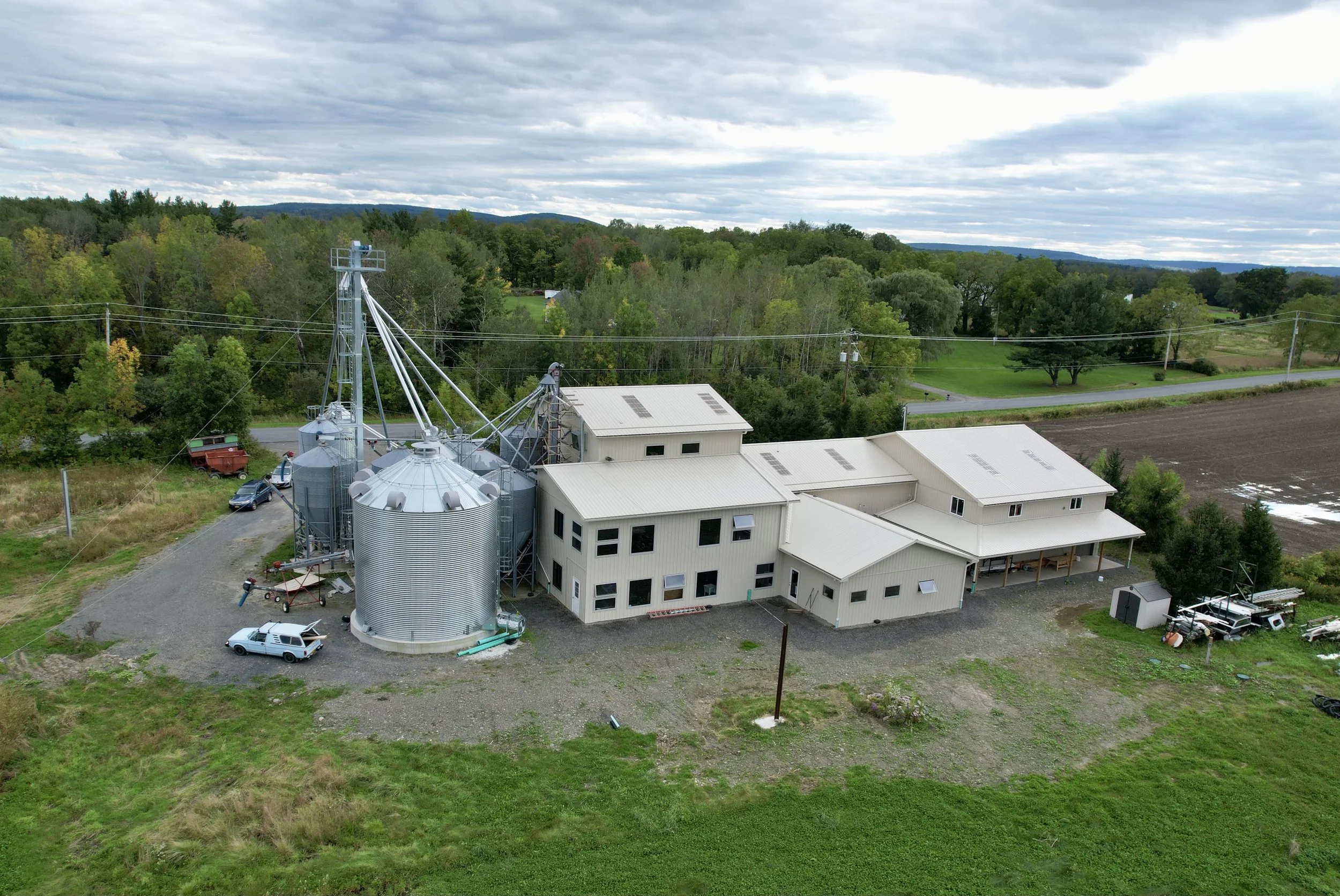
![An aerial view of the mill with it's large grain storage bins, surrounded by green fields.]()
After 17 years, we've evolved into a modern production facility…
Photo by Dave Katz
-
![12 millers are posing around a New American Mill Stone, which is inside of a light blue housing. Around them are other pieces of milling equipment and sun is coming through the windows.]()
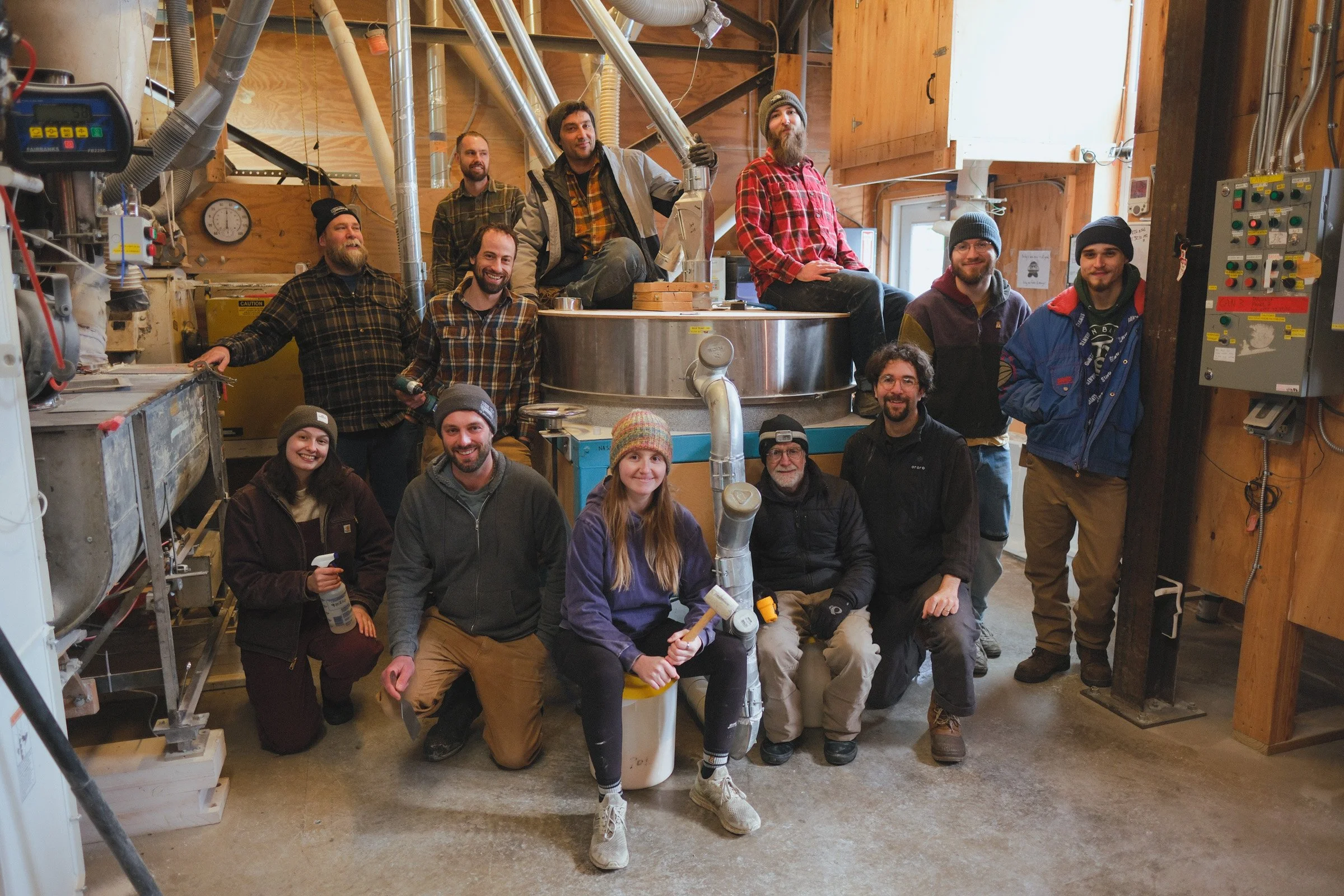
…with a large crew, a fully equipped laboratory and SQF food safety certification.
Photo by Tina Russo
-
![A group of eight men standing in a field of tall grass and plants outdoors on a cloudy day.]()
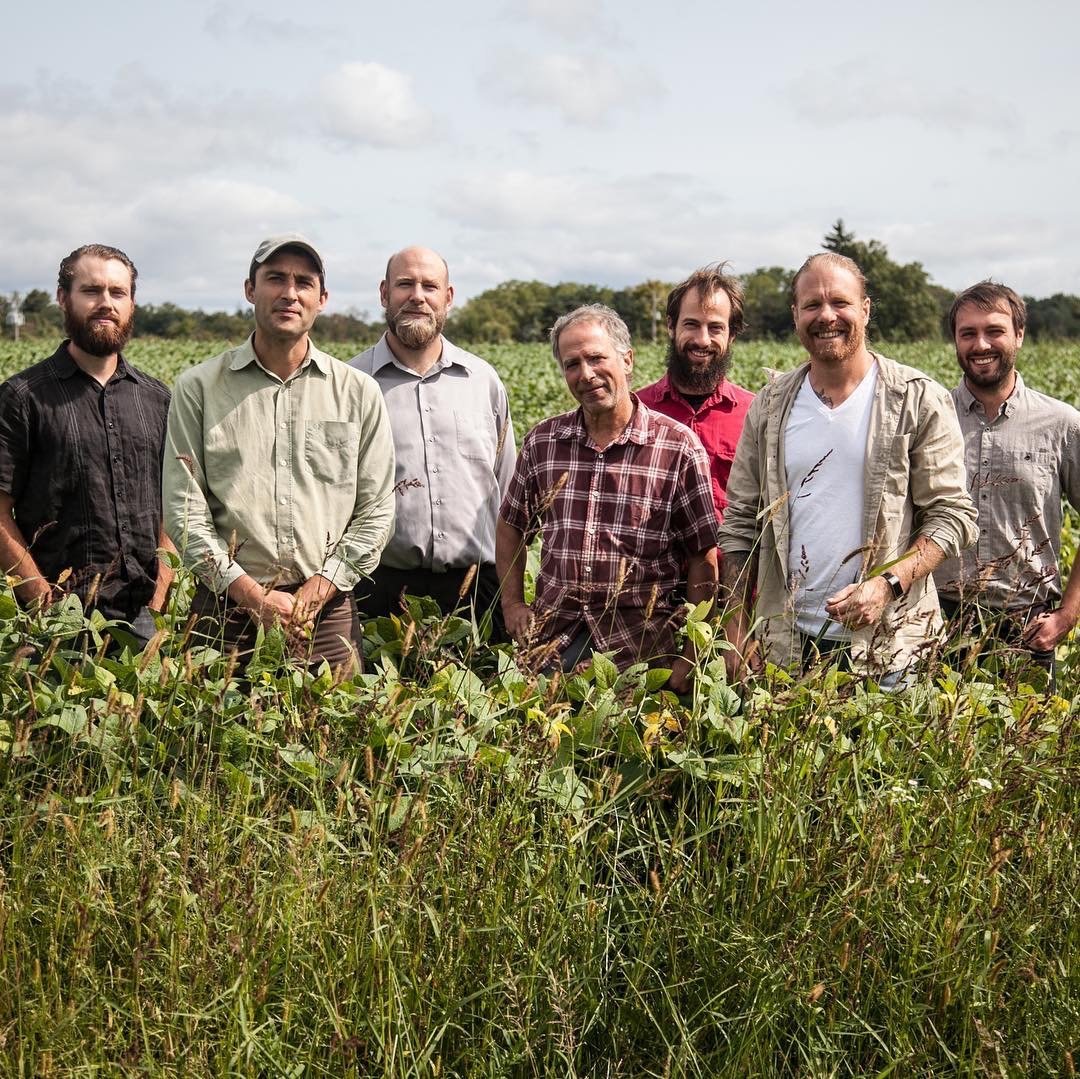
Our roots in agriculture persist through our long working relationships with our core group of farmers, not to mention that several of our employees are professional vegetable and diversified farmers when they are not at the mill!
-
![A green farming machine working in a large field with pink and brown stratified layers of soil.]()
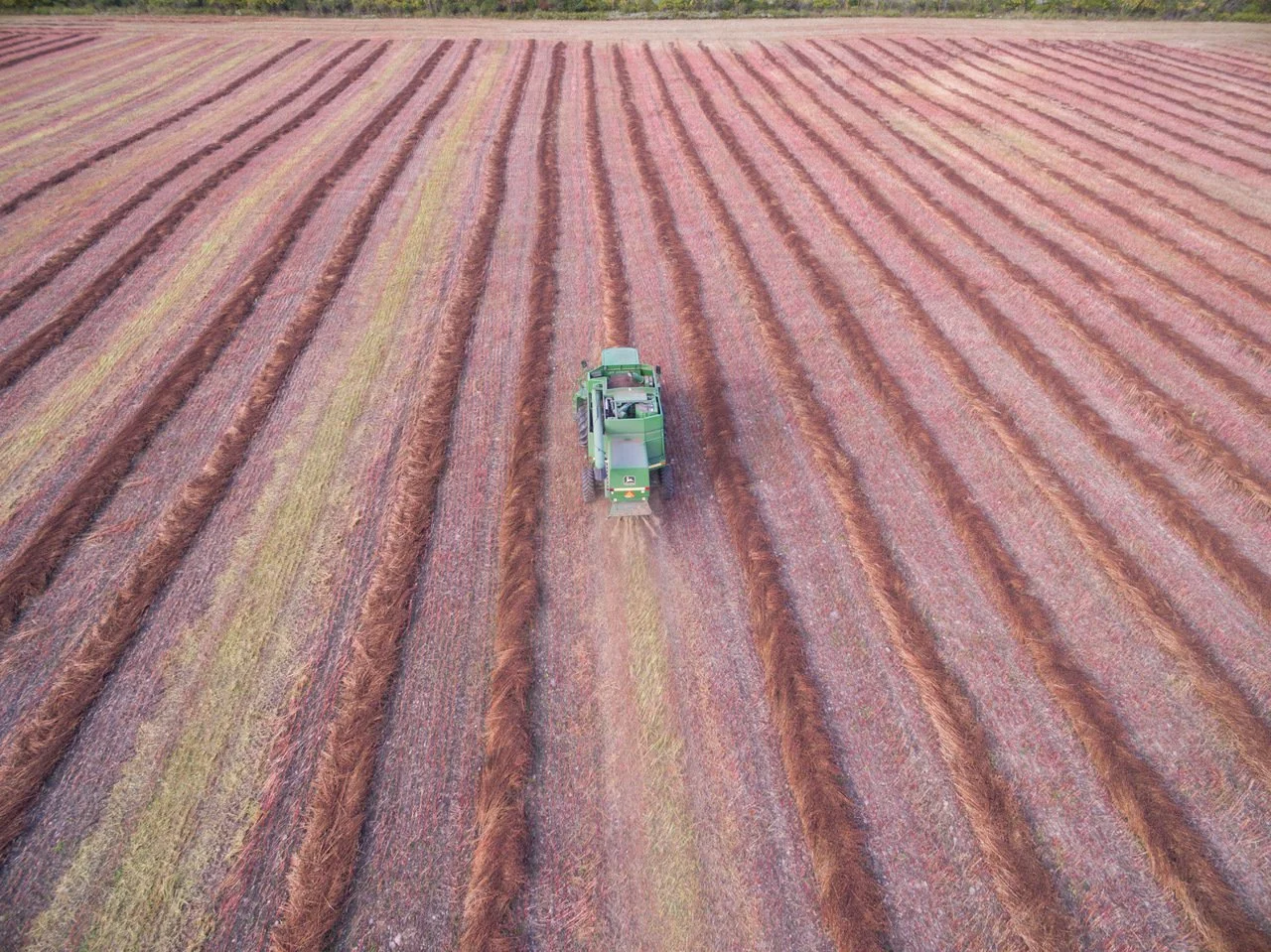
Our recent rollout of the ROC certification begins the next chapter of supporting the highest quality of food and farming.
Photo by Dave Katz
-
![Close-up of wheat grains spread out evenly.]()
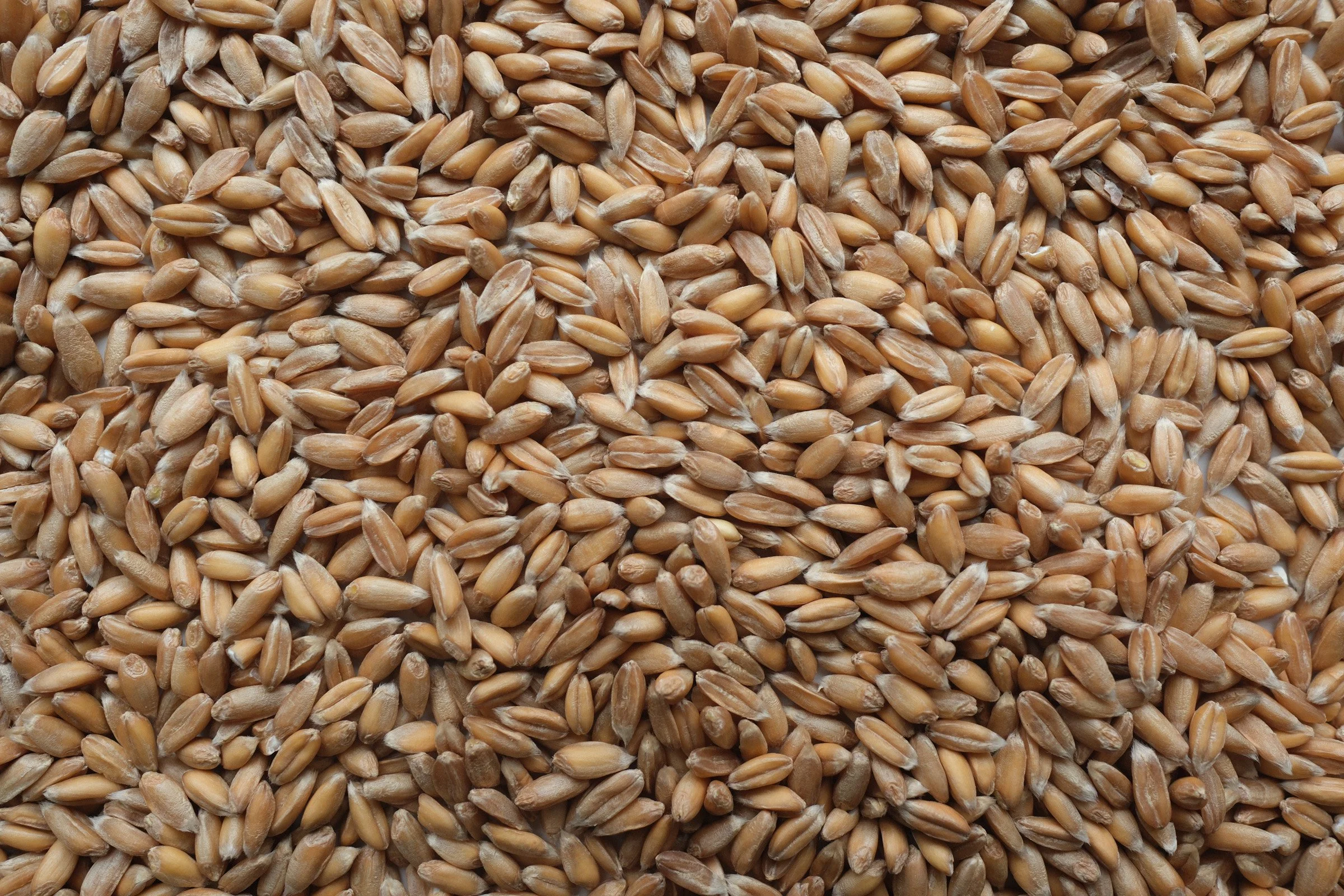
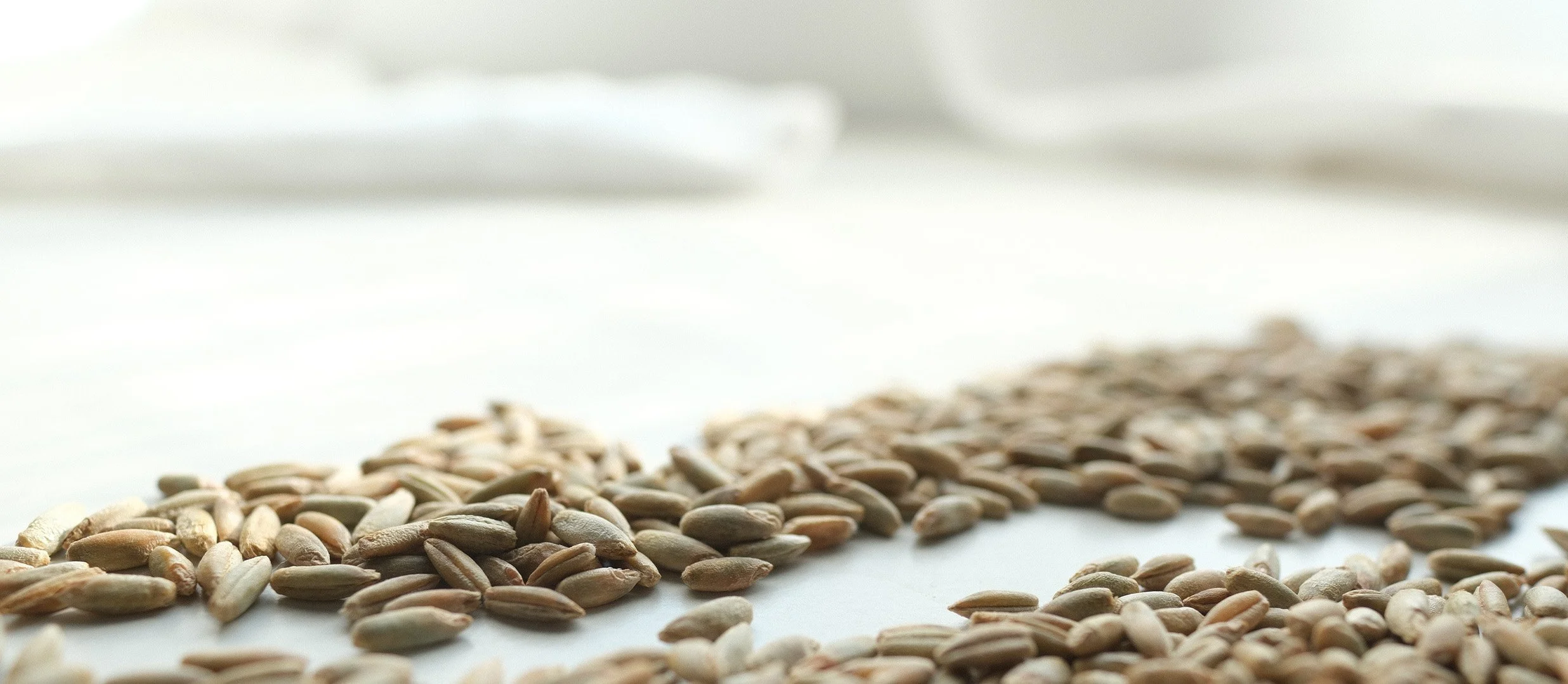
And in 2024, Farmer Ground Flour finally purchased that spelt dehuller, in an effort to help ROC certified farms diversify their marketable crops, bringing the story full circle back to where it began.
We are very proud that our flour is
Regenerative Organic Certified ™